Belief in evil witchcraft still strong - Sweden stands out
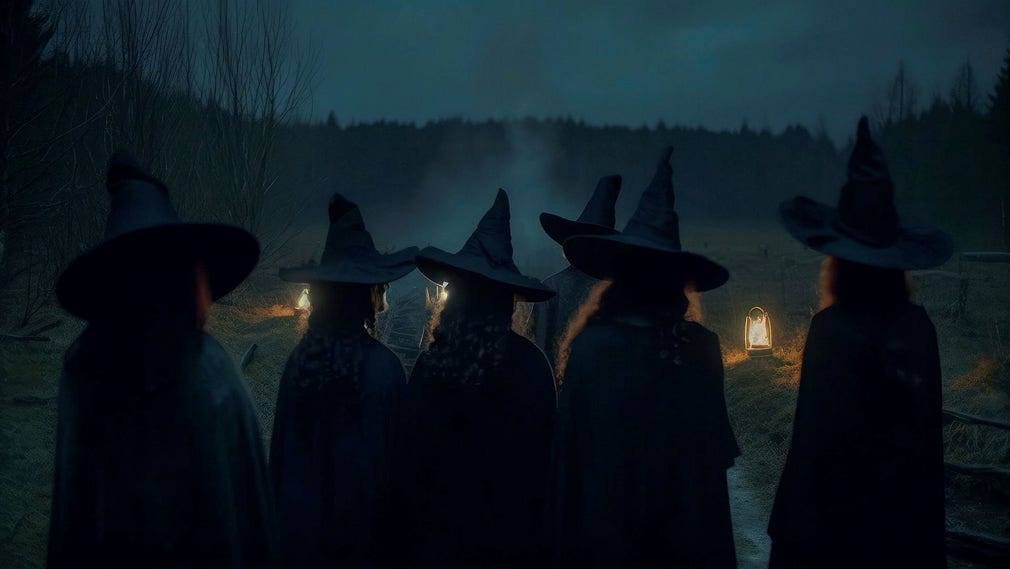
Many people still believe in evil witchcraft, meaning that it is possible to harm others by, for example, casting a curse.
- This faith has a function, but it can also be devastating. Not only for individuals, but also for entire societies, says American researcher Boris Gershman, who has investigated the matter.

Last Thursday it was that time again. On greased brooms, the witches are believed to have flown to Blåkulla where they lost themselves all night together with the Devil. Because Maundy Thursday night was the night of the witches. It was then that Judas betrayed Jesus, whereupon all the powers of evil were unleashed...
At least it was believed so, in the old farming society. Today, however, few Swedes believe in witches or sorcery at all. The fact is that Sweden belongs to the countries where witchcraft and other hocus-pocus are least believed. In many other countries, however, such a belief is more the rule than the exception.
- It is rather Sweden and the Nordic countries that stand out, says Boris Gershman, to DN.
Photo: Jan Düsing/XP/TT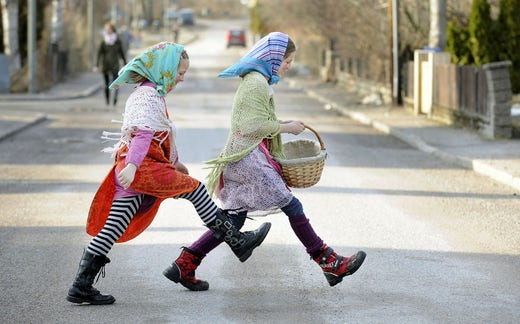
He is an economist and works at American University in the capital Washington DC, where he studies the influence of cultures on economic development. And it is in this context that he came across witchcraft and their impact on a country's ability to develop.
- We can laugh about it, but this is a reality that many people and countries live in, says Boris Gershman.
Belief in witchcraft, he says, can be defined as a person's belief that it is possible to harm someone else in a supernatural way, for example by casting a curse on him or her. To get a better picture of how common the phenomenon is, he compiled surveys conducted by the Pew Research Center on six different occasions between the years 2008 and 2017. A total of 140,000 people in 95 countries or territories were asked.
- Together, these countries represent more than half of the world's population.
The results, which are reported in the journal Plos One , show that a little over 40 percent of the respondents said they believed in witchcraft. However, the differences between the countries were large.
Belief in witches in different countries
Of the roughly 140,000 people in 95 different countries who were asked in the current study, just over 40 percent stated that they believe it is possible to harm someone else in a supernatural way, for example through a curse. However, the differences between the countries were large.
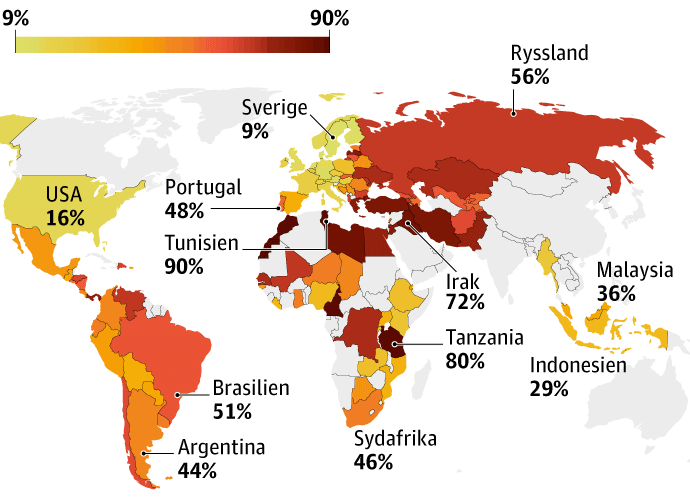
- Sweden ends up at one end with the lowest percentage of them all. There, only nine percent state that they believe in witchcraft. At the other end is Tunisia, where the corresponding share is as much as ninety percent. Ten times the difference, in other words, says Boris Gershman.
In Finland, ten percent said they believed in witchcraft, while the corresponding percentage in Norway was 16 percent. In other Western European countries as well as the USA, the percentage of "witch believers" was also relatively low, while they were significantly higher in countries in the Middle East and Africa.
But how is it that some people still believe in witchcraft – and what, if anything, distinguishes societies where it is common? To find out more, Boris Gershman tried to find correlating factors.
At the individual level, gender, age and whether one lives in a city or in the countryside were found to have little, if any, significance. Education and finances, on the other hand, played a role in that the better the finances and the higher the education a person has, the less likely she or he is to believe in witchcraft.
- But there is no guarantee, either with education or with money. Religiosity was another thing that correlated strongly. The more religious a person claims to be, the higher the likelihood that he or she believes in witchcraft. It may not be so strange, because somewhere people already believe in the supernatural, says Boris Gershman.
Photo: Privat
At country level , the quality of the country's institutions proved to be of decisive importance. The better the quality of the country's legal, police and social systems, the less likely a person will claim to believe in witchcraft and vice versa.
- It is in line with an old theory which says that belief in witchcraft was a way of keeping society together. Rules are needed for society to function and believing in witchcraft means believing that some things are okay, but not others. How conformist the country's culture is also matters. The higher the conformity, the greater the belief in witchcraft.
What is a conformist culture?
- It is a culture that emphasizes collectivism, rather than individualism. Traditions instead of innovations and so on. It is also a culture where it is difficult to assert a dissenting opinion. Such a culture, combined with weak institutions, correlates very strongly with increased belief in witchcraft, says Boris Gershman.
In this way, he believes, a belief in witchcraft runs counter to economic and social development.
Photo: TT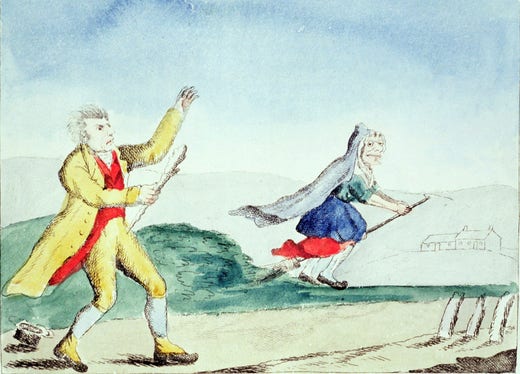
- People who think new and differently and who break the pattern risk consequences. At worst, to be murdered. For society it is also devastating. Instead of developing, it stands still.
In the current survey, Sweden, together with Denmark, thus ended up at "only" 9 percent. Lowest of them all. On the other hand, almost every tenth Swede claims to believe in supernatural witchcraft.
Manon Hedenborg White is a historian of religion at Malmö University, where she studies occultism, esotericism and new religious movements, including phenomena associated with "neopagan witchcraft". According to her, however, the witch belief that exists in many Western countries is not comparable to the accusations of witchcraft and witch persecution that occur in other countries.
Photo: Private
- In Sweden today, we have a fairly lively movement of people who define themselves as witches. But this often takes the form of a rather individualistic spirituality with a focus on female liberation, fertility and sexuality, as well as protecting the earth and nature. It's not about hurting others.
In fact, she says, the "western witch" is a continuation of the reformulation of the witch concept that began as early as the 18th century, during the Enlightenment and after the witch trials that culminated in Sweden at the end of the 17th century.
- Then it was realized that those who were convicted during the witch trials were rather victims of mass hysteria, says Manon Hedenborg White.
Photo: TT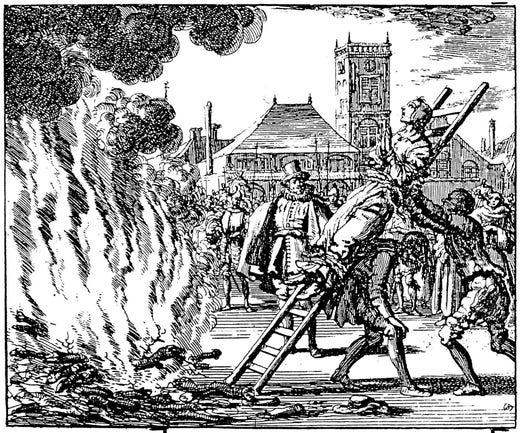
But who are the nine percent then?
- These beliefs are probably not found so much among those who identify themselves as witches, but rather among other religious groups. It also appears from the study that there is a fairly strong correlation between more traditional religiosity and belief in witchcraft. I think that it is unusual within the Church of Sweden, because it has a rather rational view of this, but that it can occur among other groups.
TOPICS IN THE ARTICLE
TEXT
Listserv moderated by Toyin Falola, University of Texas at Austin
To post to this group, send an email to USAAfricaDialogue@googlegroups.com
To subscribe to this group, send an email to USAAfricaDialogue+subscribe@googlegroups.com
Current archives at http://groups.google.com/group/USAAfricaDialogue
Early archives at http://www.utexas.edu/conferences/africa/ads/index.html
---
You received this message because you are subscribed to the Google Groups "USA Africa Dialogue Series" group.
To unsubscribe from this group and stop receiving emails from it, send an email to usaafricadialogue+unsubscribe@googlegroups.com.
To view this discussion on the web visit https://groups.google.com/d/msgid/usaafricadialogue/CAFYPD-TOGDBEe-2hiAsaAF%3DtXd2BAO0eZHhga8P-HhoBBkksdg%40mail.gmail.com.

No comments:
Post a Comment