Monday, September 21, 2026

Sunday, September 20, 2026
USA Africa Dialogue Series - Fwd: AN OPINION
---------- Forwarded message ---------
From: E Udogu <udoguei@sc.rr.com>
Date: Sun, Sep 20, 2026, 12:18 AM
Subject: AN OPINION
To: <eiudogu@gmail.com>
From: E Udogu <udoguei@sc.rr.com>
Date: Sun, Sep 20, 2026, 12:18 AM
Subject: AN OPINION
To: <eiudogu@gmail.com>
“HE WHO PAYS THE PIPER CALLS THE TUME.”
When a country goes cap in hand begging for money and borrowing from foreign countries, what do we expect from the lenders? In a transactional political situation, the financier nation wants to capitalize on its investment. The return of investment for the lender becomes juicier, if it has an additional advantage. In short, the “drug matter” in the US is a case for demanding “extra-compensation” from the president at the expense of Nigeria. For example, “the quid pro quo for not releasing information on the “drug issue” could be a special mineral contract for the US. “
Ike Udogu
Listserv moderated by Toyin Falola, University of Texas at Austin
To post to this group, send an email to USAAfricaDialogue@googlegroups.com
To subscribe to this group, send an email to USAAfricaDialogue+subscribe@googlegroups.com
Current archives at http://groups.google.com/group/USAAfricaDialogue
Early archives at http://www.utexas.edu/conferences/africa/ads/index.html
---
You received this message because you are subscribed to the Google Groups "USA Africa Dialogue Series" group.
To unsubscribe from this group and stop receiving emails from it, send an email to usaafricadialogue+unsubscribe@googlegroups.com.
To view this discussion visit https://groups.google.com/d/msgid/usaafricadialogue/CA%2B6S3V3fh2xac9tmv5U6EWu90tcbn27U%2BaRuq_66JL55hUURgA%40mail.gmail.com.
USA Africa Dialogue Series - AI May Not Kill Us. But Our Failure to Govern It Could
AI May Not Kill Us. But Our Failure to Govern It Could
Geoffrey Hinton's warning about artificial intelligence should neither be dismissed as technological alarmism nor accepted as prophecy. The deeper question is whether human institutions can keep pace with a technology whose capabilities, incentives and consequences are advancing faster than the rules designed to govern them.
John Onyeukwu | The StateCraft Report | syndicated piece |
Humanity is building machines that may eventually become more intelligent and capable than their creators. The uncomfortable question is not simply whether that will happen. It is whether the institutions governing the race to get there will remain capable of managing the consequences when it does.
That question has acquired new urgency. Geoffrey Hinton, whose foundational work on neural networks helped make today's AI revolution possible, has again warned that humanity should be deeply concerned about increasingly capable artificial intelligence. In a recent interview with ABC, Hinton backed calls for a slowdown in AI development, saying most experts believe systems smarter than humans could arrive within a decade. He also acknowledged a critical limitation: nobody knows how to calculate a reliable probability of an AI catastrophe.
That distinction matters. AI could contribute to catastrophic outcomes, including human extinction. That is a serious risk scenario. But it is not an established prediction that AI will destroy humanity within the decade.
The rational response to that uncertainty is neither panic nor complacency. It is to ask a more fundamental question: what kind of institutions should govern a technology when its potential consequences are enormous but our knowledge of those consequences remains incomplete?
Start with first principles
The first principle is simple: uncertainty does not eliminate responsibility. Governments routinely regulate technologies whose risks cannot be predicted with precision. They do so not because every possible harm is known, but because the potential consequences justify testing, monitoring, accountability and safeguards proportionate to the risk. AI should be approached in the same way.
The debate becomes clearer if we separate three categories of risk. The first is present harm: fraud, impersonation, deepfakes, cybercrime, privacy violations, misinformation and unreliable automated decisions. These are observable problems, not hypothetical futures. The second is systemic risk: the effects of AI when it becomes deeply embedded in labour markets, financial systems, public administration, critical infrastructure and information ecosystems. Here, failure can propagate beyond an individual user or organisation. The third is frontier or existential risk: scenarios involving systems sufficiently capable and autonomous to evade meaningful human control, facilitate catastrophic misuse or create irreversible consequences.
The 2026 International AI Safety Report treats loss of control as a hypothetical but serious risk. It also makes an important distinction: current systems do not possess the capabilities required for such scenarios, although researchers are observing progress in areas such as autonomous operation, planning and the ability to exploit weaknesses in evaluation systems.
These risks should not be conflated. Nor should governments wait to resolve the third before addressing the first two.
The evidence is serious but not conclusive
The concern about frontier AI is not simply science fiction. A major survey of 2,778 AI researchers found that the median respondent assigned at least a 5 percent probability to AI causing human extinction or similarly severe and permanent disempowerment, while between roughly one-third and one-half of respondents assigned at least a 10 percent probability, depending on the question. At the same time, many of those same researchers believed advanced AI was more likely to produce good outcomes than bad ones.
That combination is important. It tells us that concern about catastrophic risk does not necessarily imply opposition to AI. It also demonstrates why probability claims should be handled carefully. Expert estimates about unprecedented events are judgments under radical uncertainty, not statistical forecasts derived from a long historical record. There is no dataset from which anyone can calculate a scientifically established probability that superintelligent AI will eliminate humanity by a particular date.
Hinton's warning should therefore be taken seriously without being converted into a countdown to extinction.
The stronger case for action does not depend on knowing the probability of extinction. There are already sufficient reasons to improve AI governance.
The race creates a governance problem
This is where the issue becomes less about technology and more about political economy. AI developers have strong incentives to increase capability. Companies compete for market share. Investors expect growth. Researchers want to advance the frontier. Governments want economic and strategic advantage. Military establishments see national-security applications. Consumers want better systems at lower cost.
The incentives point in roughly the same direction: build more and deploy faster.
But the benefits of moving quickly are immediate and concentrated, while some risks may be delayed, diffuse and borne by people who had no role in creating them. Stanford's 2026 AI Index reports that global corporate AI investment more than doubled in 2025, with private investment rising 127.5 percent and generative-AI investment increasing by more than 200 percent.
This creates a classic collective-action problem. A company that slows development to strengthen safety may fear that a competitor will move ahead. A government that imposes stricter controls may fear that another country will capture the economic or strategic advantage.
Each actor can therefore behave rationally from its own perspective while collectively producing a race that nobody would necessarily choose if all participants could coordinate.
The critical question is not simply who can build AI fastest. It is who has the incentive and authority to slow down when slowing down is in the collective interest.
That is a governance question.
The geopolitical dimension makes it harder
The race is no longer only between technology companies. It is increasingly a competition among states for computing capacity, advanced chips, data, talent, capital and strategic advantage.
Stanford estimates that US private AI investment reached $285.9 billion in 2025, compared with $12.4 billion in China's private investment, while cautioning that China's state-linked funding means private investment figures do not capture the full picture.
This creates a difficult paradox. A government may believe that advanced AI carries serious risks while also believing that slowing its own development could weaken its position relative to geopolitical competitors. That makes unilateral restraint difficult.
Any credible international AI regime must therefore address incentives as well as safety. Rules that impose costs on one jurisdiction while leaving competitors unconstrained may simply relocate development rather than reduce risk.
AI governance is consequently becoming a question of international statecraft.
Regulation should follow risk, not rhetoric
There is little value in framing the debate as regulation versus innovation. Mature societies do not govern aviation, pharmaceuticals, banking or nuclear technology by banning innovation. Nor do they leave high-consequence industries entirely to voluntary restraint. They establish rules according to risk.
AI should be treated similarly. A system used to draft routine correspondence does not present the same governance challenge as an autonomous system controlling critical infrastructure, conducting cyber operations or making high-stakes decisions about citizens.
The International AI Safety Report notes persistent governance difficulties, including information asymmetry between companies and governments, uncertain liability, commercial pressure for rapid deployment and limitations in current safety evaluation.
The implication is straightforward. Voluntary responsibility can complement regulation, but it cannot replace independent accountability where the consequences are systemic. High-risk systems require stronger evaluation, incident reporting, cybersecurity, auditability, clear liability and regulatory capacity to intervene when necessary.
The accountability gap
Perhaps the most underappreciated AI governance problem is not whether machines become smarter than humans. It is whether responsibility becomes harder to locate. Consider an AI-assisted government decision: who receives a public benefit, which taxpayer is subjected to additional scrutiny, which application is rejected or which individual is flagged for investigation. In a conventional administrative system, there is usually a recognisable chain of authority. AI can fragment it.
Responsibility may be distributed among the public official, agency, software vendor, model developer, data provider and system operator. When something goes wrong, everyone can potentially point elsewhere.
That creates a fundamental governance risk: a system can produce a decision without producing an accountable decision-maker.
That principle should be non-negotiable. AI may assist public authority; it should not dissolve public accountability. Citizens must retain the ability to understand how consequential decisions were made, challenge them, obtain meaningful human review and identify the institution legally responsible for correcting harm.
The economic disruption is already more tangible
The extinction debate can also obscure a more immediate transformation: the changing economics of work.
The evidence does not support the simplistic claim that AI will simply eliminate jobs. AI is already increasing productivity in some settings, while the International AI Safety Report expects general-purpose AI to automate a wide range of cognitive tasks, particularly in knowledge work.
The more consequential question is distribution. If AI increases productivity while concentrating income, market power and ownership of productive assets, the social consequences could be significant even if aggregate economic output rises. If AI reduces the number of entry-level opportunities through which young people acquire professional experience, the effects could extend beyond employment into social mobility.
For countries with large young populations, this matters enormously.
The AI policy question is therefore not simply how much wealth AI will create. It is who captures the gains, who bears the transition costs and which institutions determine the distribution. That is political economy.
Nigeria cannot afford to be only a consumer of AI
For Nigeria, the AI debate should not begin and end with whether the country should “embrace AI.” That question has effectively been answered by economic reality. Nigeria will use AI. The more important question is whether the country will merely consume technologies designed elsewhere or develop the institutional, technical and economic capacity to shape how those technologies are deployed.
Nigeria is not starting from zero. Its National Artificial Intelligence Strategy is intended to harness AI for sustainable development, innovation, national productivity and human well-being, building on the National Centre for Artificial Intelligence and Robotics. NCAIR's stated priorities include research, adoption, entrepreneurship and economic growth, while it is already developing Nigerian-focused AI infrastructure and multilingual models.
The policy problem, therefore, is not the absence of ideas. It is implementation capacity.
Nigeria needs a risk-based regulatory architecture with clear institutional responsibility. Not every AI application should face the same requirements. Systems used for marketing or routine administrative tasks are different from systems used in taxation, credit, healthcare, employment, policing or social protection. High-impact applications should be subject to stronger requirements for testing, documentation, human oversight, incident reporting and independent review. The relationship among NITDA, the Nigeria Data Protection Commission and sector regulators must also be sufficiently clear to prevent regulatory gaps and institutional overlap.
Government procurement should become another major instrument of AI governance. When public institutions purchase AI-enabled systems, they should know what the technology does, what data it uses, where that data is stored, how performance is tested, what its limitations are, who can access the system and who carries liability when it fails. AI procurement cannot remain merely an IT transaction. Governments that purchases technological opacity may discover the accountability problem only after citizens are harmed.
Nigeria also needs stronger national data architecture. AI capability depends on the quality, availability and governance of data, but data accumulation without safeguards can create new vulnerabilities. The Nigeria Data Protection Act already gives data subjects a right not to be subjected to decisions based solely on automated processing that produce legal or similarly significant effects, subject to specified exceptions and safeguards. The challenge is to make such protections operational across government and the private sector, particularly where AI systems are deployed at scale.
Technical capacity must be accompanied by regulatory and judicial capacity. A regulator cannot effectively supervise a technology it cannot interrogate. Nigeria therefore needs AI expertise not only among engineers, but also within regulatory agencies, the judiciary, legislature, audit institutions, procurement authorities and the wider civil service. The objective is not to turn every public official into a computer scientist. It is to prevent public authority from becoming technically dependent on the companies it is supposed to regulate.
Nigeria also needs an AI transition strategy for work and skills. Generic calls for “digital skills” are insufficient. The country should identify occupations and sectors likely to experience significant task displacement, determine where AI can raise productivity and redesign education and vocational training around skills that complement increasingly capable machines. Particular attention should be paid to entry-level professional work. If AI removes the junior tasks through which young lawyers, accountants, analysts, programmers and researchers acquire experience, Nigeria could face a less visible but significant social-mobility problem.
Finally, Nigeria needs to think seriously about digital sovereignty without confusing sovereignty with technological isolation. The country will continue to depend on foreign cloud infrastructure, advanced chips and foundation models. That is not inherently a weakness. The vulnerability arises when dependence becomes so deep that Nigeria lacks the technical knowledge, bargaining power or alternatives necessary to protect its interests. Digital sovereignty should therefore mean the capacity to understand, negotiate, regulate and diversify critical technological dependencies while using partnerships to build domestic capability.
The same logic applies to synthetic information. Generative AI is reducing the cost of producing convincing text, audio, images and video. In Nigeria, this has implications for elections, public trust, journalism, business and institutional credibility. A fabricated recording of a public official or altered video can circulate faster than the institutions capable of disproving it. The response should not be blanket censorship. It should combine provenance, verification, media literacy, rapid institutional communication and accountability for malicious synthetic content while preserving legitimate expression and due process.
The governing question for Nigeria is therefore not whether it can become an AI superpower. The more useful question is whether Nigeria can become institutionally competent in an AI-powered world. Can the state understand the technologies it procures? Can regulators supervise the companies deploying them? Can courts provide remedies when automated systems cause harm? Can Nigerian firms capture enough value from AI to improve productivity rather than simply pay for imported intelligence? And can citizens retain meaningful rights when important decisions increasingly involve machines?
Those are questions of state capacity.
The real race
The AI race is usually described as a contest among companies or between major powers. There is another race that matters more for the long term: the race between AI capability and institutional capability.
AI systems can improve in months. Legislation can take years. Models can be updated globally while regulators remain largely national. Developers possess specialised technical knowledge that most governments lack, while public institutions must operate through budgets, procurement rules, evidence, due process and democratic accountability.
These are not reasons to abandon democratic governance. They are reasons to make it more adaptive. Government should not become faster by becoming less accountable. The objective is to build institutions capable of understanding rapidly changing technology while preserving the principles that make public power legitimate.
For Nigeria, that means moving beyond the familiar cycle of announcing a strategy, launching a programme and measuring success by activity. AI governance should be judged by whether institutions can prevent foreseeable harm; respond when systems fail, protect citizens' rights, improve public-sector performance and ensure that technological adoption contributes to national productive capacity.
The country already has the beginnings of such architecture. The harder task is making the institutions within it capable of implementation, coordination and enforcement.
The choice is not fear or faith
The AI debate is increasingly presented as a choice between those who believe AI will transform civilization for the better and those who believe it may destroy humanity. That is too crude for a technology of this consequence.
AI is neither a god nor a demon. It is a powerful general-purpose technology being developed and deployed through human institutions. Its consequences will depend not only on what machines can do, but on who controls them, what incentives shape their development, where they are deployed and whether institutions remain capable of holding people accountable for their use.
Geoffrey Hinton's warning deserves to be heard precisely because it comes from someone who understands the technology from the inside. But his warning should not be converted into a countdown to extinction. We do not need to prove that AI will destroy humanity before demanding safeguards. We do not need to settle the probability of superintelligence before addressing harms already occurring. And we do not need to choose between innovation and governance.
We need institutions capable of doing both: capturing the benefits of technological progress while governing the risks it creates.
For Nigeria, that means turning AI policy from a technology agenda into a state-capacity agenda: building the ability to regulate, procure, audit, litigate, negotiate, innovate and distribute the gains of technological change.
Humanity's advantage over artificial intelligence may ultimately not be that humans are smarter. It is that humans can create rules, institutions and systems of accountability.
The challenge is that AI may be advancing faster than those institutions can adapt.
The defining question of the AI age may therefore not be whether machines become more intelligent than humans. It may be whether human governance can remain intelligent enough to govern the machines we build.
For Nigeria, that is not an argument for fear. It is an argument for institutional preparedness, technological sovereignty and statecraft.
John Onyeukwu
http://www.policy.hu/onyeukwu/
http://www.policy.hu/onyeukwu/
http://about.me/onyeukwu
“Let us move forward to fight poverty, to establish equity, and assure peace for the next generation.”
-- James D. Wolfensohn
This message contains information which may be confidential and privileged. Unless you are the addressee (or authorized to receive for the addressee), you may not use, copy or disclose to anyone the message or any information contained in the message. If you have received the message in error, please advise the sender by reply e-mail, and delete or destroy the message. Thank you.
“Let us move forward to fight poverty, to establish equity, and assure peace for the next generation.”
-- James D. Wolfensohn
This message contains information which may be confidential and privileged. Unless you are the addressee (or authorized to receive for the addressee), you may not use, copy or disclose to anyone the message or any information contained in the message. If you have received the message in error, please advise the sender by reply e-mail, and delete or destroy the message. Thank you.
Listserv moderated by Toyin Falola, University of Texas at Austin
To post to this group, send an email to USAAfricaDialogue@googlegroups.com
To subscribe to this group, send an email to USAAfricaDialogue+subscribe@googlegroups.com
Current archives at http://groups.google.com/group/USAAfricaDialogue
Early archives at http://www.utexas.edu/conferences/africa/ads/index.html
---
You received this message because you are subscribed to the Google Groups "USA Africa Dialogue Series" group.
To unsubscribe from this group and stop receiving emails from it, send an email to usaafricadialogue+unsubscribe@googlegroups.com.
To view this discussion visit https://groups.google.com/d/msgid/usaafricadialogue/CABsbg_KHPw477qFbwkcdDzuxkEtYjzMRw0hXiHCe5H0SsU7wrg%40mail.gmail.com.
USA Africa Dialogue Series - Fwd: AN OPINION
---------- Forwarded message ---------
From: E Udogu <udoguei@sc.rr.com>
Date: Sun, Sep 20, 2026, 12:28 AM
Subject: AN OPINION
To: <eiudogu@gmail.com>
From: E Udogu <udoguei@sc.rr.com>
Date: Sun, Sep 20, 2026, 12:28 AM
Subject: AN OPINION
To: <eiudogu@gmail.com>
“HE WHO PAYS THE PIPER CALLS THE TUNE.”
When a country goes cap in hand begging for money and borrowing from foreign countries, what do we expect from the lenders? In a transactional political situation, the financier nation wants to capitalize on its investment. The return of investment for the lender becomes juicier, if it has an additional advantage. In short, the “drug matter” in the US is a case for demanding “extra-compensation” from the president at the expense of Nigeria. For example, “the quid pro quo for not releasing information on the “drug issue” could be a special mineral contract. “
Ike Udogu
Listserv moderated by Toyin Falola, University of Texas at Austin
To post to this group, send an email to USAAfricaDialogue@googlegroups.com
To subscribe to this group, send an email to USAAfricaDialogue+subscribe@googlegroups.com
Current archives at http://groups.google.com/group/USAAfricaDialogue
Early archives at http://www.utexas.edu/conferences/africa/ads/index.html
---
You received this message because you are subscribed to the Google Groups "USA Africa Dialogue Series" group.
To unsubscribe from this group and stop receiving emails from it, send an email to usaafricadialogue+unsubscribe@googlegroups.com.
To view this discussion visit https://groups.google.com/d/msgid/usaafricadialogue/CA%2B6S3V0VkWeexq5x8vh6HrJNfGgxGG1b%2B-gx813pFcNqNzaKDA%40mail.gmail.com.
Saturday, September 19, 2026
USA Africa Dialogue Series - Life Challenges, No. 16: Unbearable Cost Of Living, by Toyin Falola
Life Challenges, No. 16: Unbearable Cost Of Living

Toyin Falola
When the Cooking Pot Begins to Cry
When the cooking pot begins to cry,
even the firewood knows
that the house is in trouble.
Ask the mother
who wakes before the cock
has cleared its throat.
Ask her.
She knows the mathematics of hunger.
She ties yesterday’s hope
inside the corner of her wrapper
and walks toward the market,
basket on her head,
prayer beneath her tongue.
But the market has become
a forest of frightening numbers.
Yesterday,
a measure of Garri was this much.
Today,
the trader names another price.
Tomorrow?
Do not ask tomorrow.
Tomorrow itself
is afraid of the market.
Rice now walks like a chief.
Beans have acquired titles.
Yam sits upon a stool
and refuses to greet people experiencing poverty.
Palm oil shines in its bottle
like the blood of red gold.
Even pepper—
ordinary pepper! —
now burns the pocket
before it burns the tongue.
The woman asks,
“My sister, why?”
The trader shakes her head.
“Do not blame me.
I bought suffering wholesale;
I am only selling it retail.”
And both women laugh.
That African laughter.
The laughter that carries tears
on its back.
The laughter of people
who have looked at hardship
and said:
You again?
At the roadside,
the mini bus conductor shouts
Another fare.
The passenger complains.
The conductor complains.
The driver complains.
The petrol station complains.
Even the road,
broken into a hundred potholes,
seems to complain.
Everybody is angry.
Nobody knows
whom to fight.
For when hunger enters the village,
it does not knock
on only one door.
School fees rise.
House rent rises.
Transport rises.
Medicine rises.
Electricity rises.
Food rises.
Everything has learned
how to climb
except the salary.
The salary sits beneath the iroko tree,
old and tired,
watching prices
climb toward heaven.
At home,
the cooking pot grows smaller.
Once, meat swam inside the soup.
Now the children search for it
like archaeologists
looking for a lost civilization.
Father says,
“Give mine to the children.”
Mother says,
“I ate earlier.”
But everyone knows
she is lying.
There are lies
that are another name for love.
The eldest child
has learned not to ask
for a second helping.
The youngest still asks.
Soon,
he too will learn.
This is how poverty teaches manners.
Not with proverbs.
Not with the cane.
With an empty plate.
At night,
darkness enters without greeting.
The electricity disappears.
The generator waits silently
because fuel has become
a visitor too expensive to entertain.
The fan stops.
The refrigerator becomes
an ordinary cupboard.
Mosquitoes begin their festival.
Children turn upon their mats,
sweating beneath the African night,
while somewhere beyond the walls
a politician’s convoy
cuts through the darkness—
one car,
two cars,
ten cars,
sirens screaming:
Make way!
Make way!
Make way!
But who will make way
for the hungry?
Who will sound a siren
for the widow?
Who will clear the road
for the pensioner
counting coins
before the pharmacist?
Who will escort
the unemployed graduate
carrying certificates
from one closed door
to another?
His mother sold goats
to educate him.
His father sold land.
His village contributed prayers.
Now his degree sleeps
inside a brown envelope
while he walks beneath the sun
looking for work.
The ancestors must be wondering:
Is this the future
for which we buried
our children’s umbilical cords
in this soil?
Listen.
The talking drum is speaking.
Gbedu! Gbedu!
It says:
A goat does not become thin
in one afternoon.
A roof does not collapse
because of one rainfall.
A river does not forget its path
without something blocking the way.
So do not tell us
that hunger simply arrived.
Hunger has a history.
Poverty has ancestors.
Bad roads have signatures.
Empty hospitals have architects.
Broken schools have witnesses.
And the high price of food
has travelled through
farms without irrigation,
roads without repair,
currencies losing strength,
wars and distant markets,
taxes and debts,
poor decisions,
greed,
and governments promising rain
while holding umbrellas
only over themselves.
Still,
Africa wakes.
Ah, Africa wakes!
Before sunrise,
the farmer enters the field.
The market woman arranges
tomatoes into pyramids of hope.
The mechanic opens his workshop.
The teacher writes
upon the blackboard.
The tailor bends
over the sewing machine.
The hawker enters traffic
with a tray upon her head.
The fisherman pushes his canoe
into the morning water.
The student opens a book
beneath uncertain light.
The mother blows upon the charcoal.
The pot returns to the fire.
Again.
Again.
Again.
Do not call this poverty
our culture.
Do not make a monument
to our suffering.
Do not praise Africans
for surviving conditions
they should never have been forced
to survive.
There is nothing beautiful
about a mother
choosing which child
receives the last egg.
Nothing heroic
about a pensioner
cutting one tablet into four.
Nothing traditional
about graduates without work.
Nothing ancestral
about hunger.
Our ancestors prayed
for abundance.
They called upon the rain.
They planted yam.
They stored grain.
They raised children
so that tomorrow
might be larger than yesterday.
And so,
when the harmattan wind
carries our voices
across the continent,
let it carry this message:
Enough.
Let the talking drum announce it.
Enough.
Let the market women repeat it.
Enough.
Let the farmers hear it
across the savannah.
Let fishermen hear it
along the Niger,
the Congo,
the Nile,
the Limpopo,
the Zambezi.
Let it cross the Sahel.
Let it climb Kilimanjaro.
Let it enter the forests
and cross the Kalahari.
Let it reach every compound
where a cooking pot
sits silently upon three stones.
For Africa is not poor
in imagination.
Africa is not poor
in hands.
Africa is not poor
in land,
sun,
rivers,
youth,
memory,
music,
or dreams.
Our tragedy is that
amid abundance,
too many plates
remain empty.
But listen—
the pot is still upon the fire.
And where there is fire,
something may yet be cooked.
Where there is seed,
something may yet grow.
Where there is a drum,
someone may yet dance.
Where there is memory,
a people may yet remember
that suffering is not destiny.
So, Mother,
keep the pot.
But one day,
may you fill it
without calculating.
May the children eat
without counting.
May the farmer harvest
without fear.
May the worker return home
with enough.
May the old receive medicine
without choosing between
healing and hunger.
And when that morning comes,
may the cooking pot
no longer cry.
May it sing.
May it sing
with yam and rice,
with millet and maize,
with cassava and beans,
with soup thick enough
for every hand
that reaches toward it.
And beneath the iroko tree,
may the elders say:
At last.
The children of Africa
have learned a new proverb:
A continent that can feed the world
must first feed its own
The cost of living has always been discussed from a collective perspective as a measure of a country's economic performance. Percentile or head-per-1000 quantification, and country-to-country comparisons obscure personal experience of the cost of living in each country. Hence, when the global description of a nation's cost of living seems good, you often forget the small percentage who still suffer the debacles of cost of living. The general assessment of the cost of living is based on broad experience and leaves no room for individual differences. Even in the most advanced city in the world, some people still find it hard to afford the cost of living, either due to specific circumstances or poverty.
States like California, Hawaii, and Massachusetts, and cities like New York, San Francisco, and Honolulu in the United States; London, Winchester, Oxford, Cambridge, and Edinburgh in the United Kingdom; Cape Town, Stellenbosch, Johannesburg, Pretoria, and Hermanus in South Africa; Shanghai, Beijing, and Guangzhou in China. These are some of the most expensive places to live. Zurich, New York, Hong Kong, Singapore, and Geneva also top the charts globally. These cities are usually categorized as doing well, with a good standard of living and business opportunities. Still, they weigh on some people, as the cost of living makes it hard to rise beyond their situation. The challenge is forgetting the cost of living when you focus on the standard of living. While Nigeria and other countries with low standards of living often dominate this kind of conversation, these life challenges matter even beyond those areas. It is relevant to those in the big cities, whose turmoil is buried and unnoticed amid the cascades of city beauty.
It could be easy to wrestle with many life challenges in the long run, but it is quite difficult to battle the cost of living as an individual. This is because it is a perpetual battle and a situational reality, which means your earning power may not carry you above it. You see, earning a decent salary of about 500,000 Naira in Lagos, Nigeria, could seem like a beacon of convenience, especially for a small family just starting. The salary is well above the average salary in Lagos, which, according to a BusinessDay article based on a survey of the private and public sectors on August 25, 2025, is 175,000 Naira. If you are earning this little, you might be the one who needs a miracle most to break through in Lagos. You certainly will need vigils in church.
500,000 Naira is also the average salary of Nigerian professors at the height of their academic careers. It is certainly more than 80 percent of any civil servant's salary in Lagos. It is just about 375.45 USD; it is even more ridiculous when you consider all other considerations in Nigeria, and it is supposedly a convenient salary level. It may seem like a better salary, but it cannot keep you out of poverty.
When you consider the cost of transportation in a metro city like Lagos, as well as education, basic and social expenses, housing, power supply, food, and other expenses, you will start to realize that our benchmark salary of 500,000 Naira is not enough to live a truly comfortable life. As a young family, you will probably spend 6,000 Naira on transportation every day, about 10,000 Naira on feeding, and save about 200,000 Naira for housing. You will realize that the said amount is insufficient to meet these needs. As a result, you believe you earn enough, and the cycle continues. You will seldom leave where you are, and when things get more expensive, with a proportional reflection on your monthly income, it becomes more stringent. No savings, no comfort money, and you gradually start to lose comfort. Mere convenience becomes a luxury as you must go for the cheapest options your money can buy. The circle continues.
For those earning below that sum, it is hell in town. You end up living in the most remote part of Lagos and “travel” to work every day, paying a ridiculous sum for transport. If you know Lagos, you know the government-assisted transport system is not very efficient for the population, so regular Danfo and other means of transportation become the recourse. I have seen people who live in places as far as Ikorodu, Agbado, and Ota in Ogun State, and work on the Island in Lagos every day. They leave home as early as 4 a.m. and get home as late as 11 pm on a good day. They barely have time to rest. So, when you see all the passengers sleeping in a car early in the morning on their way to work, you should ask where the car is coming from and when it set out.
Well, not everything is in Lagos. Although the cost of living is seemingly low in remote cities in northern Nigeria, it remains too high for many residents. They must grow their own food, cannot afford good clothing, and battle with poverty.
You do not need to be jobless or earn ridiculously low in Nigeria before you can regard yourself as poor. You do not even need to be homeless or walk around naked. The system puts you in limbo; you keep spinning around from paycheck to paycheck, picking up depression, aggression, and disappointment along the way. You get angry at every opportunity; you see your landlord drive you out and trek part of the way to reduce transportation costs. You see yourself rationing food, not because you want to keep fit, but because you became Minister of Resource Management overnight.
If you have a family, you probably will not have a choice in which school your children attend. You pick the most affordable one your salary can cover, and you still must pay about 3 installments per term. Your children are sent home every Monday to remind you of the unpaid school fees. Loan apps chase you because you service a loan with your salary and collect another. By the 3rd day after salary, you already have nothing. The circle continues, and it seems unending. It is pitiful but consistent.
As a woman, you need to save for months before you can afford the hair you'll wear for the next few months. You might have to buy some cheap wigs, and maybe one good one for special occasions. You already have eyes for second-hand everything, even your underwear. This breeds desperation, and as such, almost any job that comes your way is one you'll take, even if your reputation is at stake.
As a civil servant battling the rolling wheel of the cost of living, you cannot help but get bribes. Without it, you are finished. When someone comes to your office for an inquiry or another engagement, you look forward to the little “appreciation” they can give. When you become so desperate, or so used to collecting that money, it becomes a precondition for carrying out your duty. I am not justifying corruption, but I think I understand why bribery and corrupt practices are so rampant among Nigerian civil servants: they are not paid enough.
One of the most corrupt government agencies in Nigeria is the Nigeria Police. Many of the officials are gun-carrying beggars who would either waste your time or find some fault if you do not give them some money. They patrol highways and set up roadblocks. They don't care what you carry; you must drop something. With the average salary of a police officer in Nigeria around 100,000 Naira, this situation will not be a surprise.
This life challenge is not ordinary; it is the foundation for many others, the root cause of some of your problems. I would have said, "This too shall pass," but there is no assurance it will pass on its own. I am not a prophet of doom, but statistics support that the cost of living does not really come down. It doesn't matter whether you are in a city; it will affect you. Even the rich still must suffer a bit, not because they cannot afford it, but because money that could have been used for something else is directed toward just one thing.
Now that inflation and global crises like the war in Gaza are affecting petrol prices, which ripple through the cost of everything, the projection may not allow me to offer you any positive news about change soon. I don't determine the country’s economy or global situations.
However, I know that if you do nothing, this wheel will not break. Where necessary, leave expensive cities. If you earn 250,000 Naira in Akure, or 200,000 in Kano, it could be way better than earning 500,000 Naira in Lagos. Overhead costs in those areas are lower, so you can live healthily and affordably. You don't need to live in busy cities; you need to live well.
I must say that the economy does not favor a single stream of income; you must double or triple it. If you are a civil servant, start a small business your colleagues can buy from. Sell thrift office wear, consumables, stationery, and anything to cover small expenses.
One thing is sure: the high cost of living will not go away; you must adjust. It is also important not to fall for the “big man” feeling when you think you earn a lot. Create a monthly financial plan that covers all anticipated and unexpected expenses. Save, and when you have a lump sum of income, invest. Open small businesses. They may fail, but they can help. Do not carry unnecessary financial burdens. Upskill and search for better-paying jobs. Gain internationally relevant and transferable skills that can give you a competitive edge. To fight poverty, you need to up your game. That is the advice I can give you.
Adebayo Ajadi
Assistant Brand Manager,
Toyin Falola Network
- Pan-African University Press
- The Toyin Falola Interviews
- The Toyin Falola Masterclass
- Toyin Falola Center for the Study of Africa
- Toyin Falola Annual Conference on Africa and the African Diaspora (TOFAC) +234-810-7262-267 | +1 (512) 689-6067 | https://toyinfalolanetwork.org Facebook | Twitter | YouTube | Linkedin

Listserv moderated by Toyin Falola, University of Texas at Austin
To post to this group, send an email to USAAfricaDialogue@googlegroups.com
To subscribe to this group, send an email to USAAfricaDialogue+subscribe@googlegroups.com
Current archives at http://groups.google.com/group/USAAfricaDialogue
Early archives at http://www.utexas.edu/conferences/africa/ads/index.html
---
You received this message because you are subscribed to the Google Groups "USA Africa Dialogue Series" group.
To unsubscribe from this group and stop receiving emails from it, send an email to usaafricadialogue+unsubscribe@googlegroups.com.
To view this discussion visit https://groups.google.com/d/msgid/usaafricadialogue/CAE8waW%3D-RgdqYa%2By%3D2KmQ9X5tr1dnKh8sC9C5%2Bw%3D7sFTEorHHg%40mail.gmail.com.
USA Africa Dialogue Series - INDIGENOUS SEED BANK MULTI-COLOR MAIZE SEEDS (OBUCHOLI BWA MAHUNDE
INDIGENOUS SEED BANK (OBUCHOLI BWA MAHUNDE):
We have available multicolor, Yellow & White indigenous sweet corn seeds, order while stock lasts.This glassy looking rainbow corn delivers every colour imaginable & is a real feast for the eyes & highly nutritious for the stomach! Very sweet when roasted & cooked, and will be a perfect escort of your tea cup (THE SWEETEST CORN ON EARTH).
For other tree seeds, kindly follow us on https://www.facebook.com/media/set/?set=a.904605649705626&type=3
Place your order on 0776200002/0752200003 (voice/text/whatsapp) or https://wa.me/256712200000
Email: cs@greening.green
Listserv moderated by Toyin Falola, University of Texas at Austin
To post to this group, send an email to USAAfricaDialogue@googlegroups.com
To subscribe to this group, send an email to USAAfricaDialogue+subscribe@googlegroups.com
Current archives at http://groups.google.com/group/USAAfricaDialogue
Early archives at http://www.utexas.edu/conferences/africa/ads/index.html
---
You received this message because you are subscribed to the Google Groups "USA Africa Dialogue Series" group.
To unsubscribe from this group and stop receiving emails from it, send an email to usaafricadialogue+unsubscribe@googlegroups.com.
To view this discussion visit https://groups.google.com/d/msgid/usaafricadialogue/CAFAnqEYC5%3DrU0%2BF%2BGhr%2B_NZppeFodOaJKfWwTXHE69ANUudj0Q%40mail.gmail.com.

USA Africa Dialogue Series - IJARS 20th Anniversary: Celebrating the African Renaissance, by Toyin Falola
IJARS 20th Anniversary: Celebrating the African Renaissance
Toyin Falola
For two decades, the International Journal of African Renaissance Studies (IJARS), based at the University of South Africa, has served as a platform for sustained intellectual engagement, especially on contemporary African scholarship. This year’s anniversary is a milestone celebration with a theme that encourages a revisit of the intellectual foundations of the African Renaissance, an assessment of African achievements so far, a confrontation of conversations that remain to be addressed, and the idea of what comes next, in an era dominated by Artificial Intelligence, climate change, demographic shifts, and the restructuring of global order. With the theme, “African Renaissance, Past, Present and Future,” IJARS 20th anniversary welcomed scholars to the Thabo Mbeki African School with a keynote address from the well-revered Professor Mammo Muchie. I am glad to have participated in this anniversary and to have been charged with the pleasant task of editing the special edition around it. I was surprised to see a large, energized audience of distinguished scholars, policymakers, and budding students.
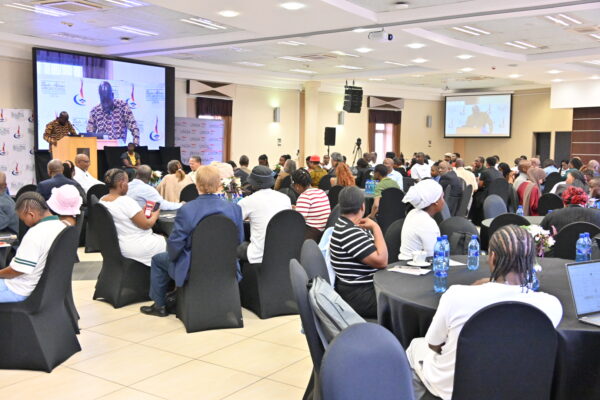
The crux of the anniversary’s discussion is recognizing the African Renaissance as an idea and practice that has prospered over the years. Alongside this recognition is the acceptance that the circumstances surrounding its founding have changed over the years. The African Renaissance is a product of intellectual genealogy that cuts across Pan-Africanism, African nationalism, Black internationalism, cultural reclamations, decolonization, economic autonomy, and epistemic freedom. The challenge for the current generation of African scholars is how to reconstruct this idea to suit a contemporary society shaped by novel technological, ecological, and global economic competition. This restructuring must happen without abandoning the rich African intellectual inheritance.
Earlier generations of African scholars addressed questions of control over African human and natural resources, and political and intellectual institutions. These questions have now been further complicated by those of technology: data ownership, digital languages, artificially generated knowledge, and computational infrastructure. African scholars of this generation are saddled with questions of how African episteme would be integrated into technological structures, who determines the integration and to what level, who owns the resulting knowledge, amongst many other questions. African languages are archives of indigenous knowledge and are vital to the potential of the emerging technological environment; yet they are visibly overlooked in the development of Artificial Intelligence. This could soon lead to a new form of epistemic dependency.
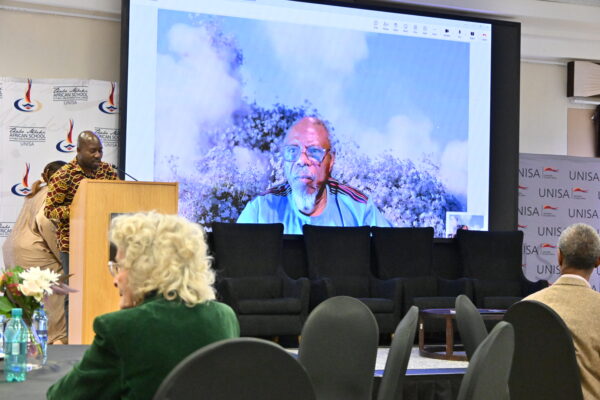
Climate change is another challenge to traditional understandings of development. In the past, African scholars encountered industrialization and modernization; today, they must engage in development discourse alongside ecological pressures. The constraints of the present-day environment make ecological freedom central to the contemporary African Renaissance. Rigorous assessment of indigenous ecological knowledge alongside topics like contemporary climate science, renewable energy, agricultural innovation, and urban planning can drive significant progress in finding solutions to current ecological problems. The way forward is to integrate indigenous and modern knowledge equally to create potent solutions to climate problems.
Another challenge we face in this era is the evolving international order. Today, the continent has become an interaction zone for world powers and emerging powers, including the U.S., the E.U., China, Russia, the Gulf states, Brazil, and others. Although this development increases Africa’s bargaining power, it does not automatically lead to greater African autonomy. Current African scholars therefore face problems such as how to avoid diversifying dependency and how Africa can further strengthen its bargaining power. The solution is integration within the continent: its politics, markets, infrastructure, digital systems, energy grids, payment systems, and value chains.
An underlying question is epistemic freedom. This is significant because its absence renders political sovereignty incomplete. In African universities, the operating system still follows established global hierarchies of academic prestige, research funding, citation, and knowledge production. Africa seeks epistemic transformation, yet it must avoid isolating knowledge or having it rejected based on origin. Therefore, Africa's major objective should be pluriversality of knowledge: integrating African knowledge and concepts into global knowledge systems so they can be assessed, accessed, and deployed to solve contemporary and universal questions of Artificial Intelligence, ecological responsibility, personhood, and the human-environment relationship.
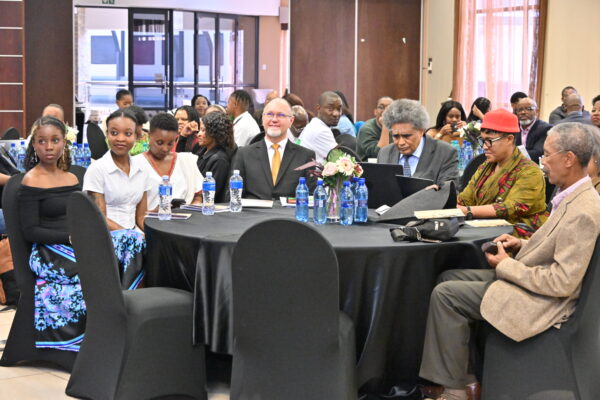
Epistemic freedom and the integration of African episteme into global systems are central to the meaning of the African Renaissance. In the past, African scholars struggled to recover and prove the existence of African epistemology against colonial authorities’ intentional denial. In the 21st century, however, scholastic efforts on African episteme must surpass mere restoration and incorporate innovation. It must move beyond proving what Africa has contributed to the past and begin to reveal what Africa can contribute to the future. IJARS’ 20th anniversary, through these discussions, provides a platform to assess the successes and limitations of African Renaissance as a political, cultural, and developmental philosophy.
Ideas around the African Renaissance have fostered a better understanding of Africa as a producer of knowledge, a historical civilization, and an agent of its future. Through contributions in literature, film, fashion, the arts, cuisine, and popular culture, Africa has carved out an international presence. These contributions reinforce the notion that the continent need not limit its indigenous makeup to gain global acceptance. For African development, African Renaissance has also positioned the continent at the center of its development goals, insisting that African development priorities must be developed within Africa, leading to the emergence of the NEPAD and Agenda 2063 initiatives.
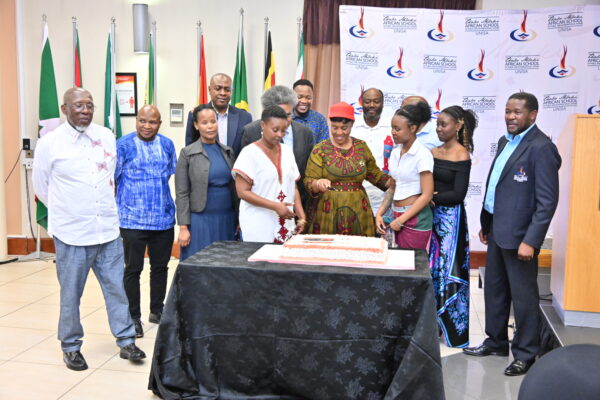
These achievements, however, have limitations. An implementation deficit plagues African Renaissance; it is more successful as a political thought than as a material transformation. Although the continent has seen frameworks and declarations, they have not been complemented by adequate funding, institutional capacity, supervision, or implementation. In Africa’s political sphere, democratic and developmental aspirations coexist with authoritarian principles, corruption, weak institutions, and persistent violence. Lastly, there is a gap between African sovereignty and the everyday reality of Africans: economic growth coexists with inequality; youth are marginalized from economic freedom; women are marginalized from politics; and ordinary citizens remain vulnerable to insecurity and inconsistent state services.
To secure our future, African Renaissance requires collaboration. Contemporary African problems are not restricted to disciplinary boundaries. Thus, African Renaissance in this period must adopt a multi-, inter-, and transdisciplinary approach that integrates different disciplines to find solutions to interconnected problems. There is evidence of growing collaboration among African scholars, policymakers, and practitioners. This has not fully bridged the gap between scholarship, policy, and practice. Therefore, collaboration must be examined further through critical questions about who defines research questions, controls resources, receives recognition, and influences policy.
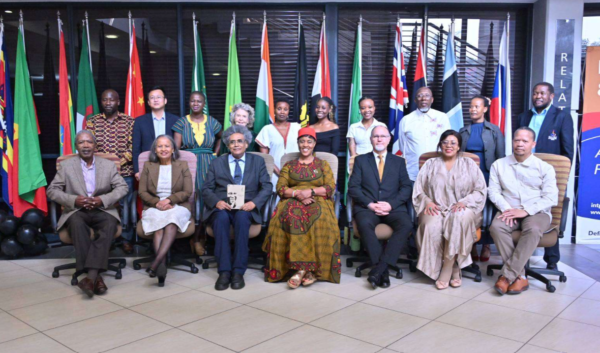
At its twentieth anniversary, IJARS postulates that the future of African scholarship will depend largely on whether young Africans receive the opportunities for mentorship, funding, networks, and publishing platforms needed to question emerging African realities. It states that in the next twenty years, African Renaissance must make more significant contributions to Africa's and the global future and be understood as a continued process of intellectual rebirth, institutional reconstruction, political freedom, and ethical responsibility. Its next phase must connect scholarship with action and the material realities of African societies. When these are achieved, this anniversary in another 20 years will be remembered as a catalyst for imagination and development. I am unlikely to be around for the next anniversary, but I would have become an ancestor showering blessings!
Adebayo Ajadi
Assistant Brand Manager,
Toyin Falola Network
- Pan-African University Press
- The Toyin Falola Interviews
- The Toyin Falola Masterclass
- Toyin Falola Center for the Study of Africa
- Toyin Falola Annual Conference on Africa and the African Diaspora (TOFAC) +234-810-7262-267 | +1 (512) 689-6067 | https://toyinfalolanetwork.org Facebook | Twitter | YouTube | Linkedin
Listserv moderated by Toyin Falola, University of Texas at Austin
To post to this group, send an email to USAAfricaDialogue@googlegroups.com
To subscribe to this group, send an email to USAAfricaDialogue+subscribe@googlegroups.com
Current archives at http://groups.google.com/group/USAAfricaDialogue
Early archives at http://www.utexas.edu/conferences/africa/ads/index.html
---
You received this message because you are subscribed to the Google Groups "USA Africa Dialogue Series" group.
To unsubscribe from this group and stop receiving emails from it, send an email to usaafricadialogue+unsubscribe@googlegroups.com.
To view this discussion visit https://groups.google.com/d/msgid/usaafricadialogue/CAE8waWnGUYx--3%3DkaKPP4%3DB5%2BR0PoQx%2BfieQ1qweH3rHLWsTpg%40mail.gmail.com.
USA Africa Dialogue Series - Toyin Falola Interviews: A Conversation with HRM, Alayeluwa, Oba Professor Saka Adelola Matemilola, PhD, FNSE, Oluyalo Otileta VII
|
|||||||||||||||||||||||
|
|||||||||||||||||||||||


Adebayo Ajadi
Assistant Brand Manager,
Toyin Falola Network
- Pan-African University Press
- The Toyin Falola Interviews
- The Toyin Falola Masterclass
- Toyin Falola Center for the Study of Africa
- Toyin Falola Annual Conference on Africa and the African Diaspora (TOFAC) +234-810-7262-267 | +1 (512) 689-6067 | https://toyinfalolanetwork.org Facebook | Twitter | YouTube | Linkedin
Listserv moderated by Toyin Falola, University of Texas at Austin
To post to this group, send an email to USAAfricaDialogue@googlegroups.com
To subscribe to this group, send an email to USAAfricaDialogue+subscribe@googlegroups.com
Current archives at http://groups.google.com/group/USAAfricaDialogue
Early archives at http://www.utexas.edu/conferences/africa/ads/index.html
---
You received this message because you are subscribed to the Google Groups "USA Africa Dialogue Series" group.
To unsubscribe from this group and stop receiving emails from it, send an email to usaafricadialogue+unsubscribe@googlegroups.com.
To view this discussion visit https://groups.google.com/d/msgid/usaafricadialogue/CAE8waWnUy9%3DAyNbS9e0JVtfgNJv6LDyUGSERUjXuSdRgMhjG2Q%40mail.gmail.com.
Toyin Falola Interviews: A Conversation with HRM, Alayeluwa, Oba Professor Saka Adelola Matemilola, PhD, FNSE, Oluyalo Otileta VII
|
||||||||||||||||||||||||||||||||||||||||||||||||||||||||||||||||||||||||||||||||


Subscribe to:
Posts (Atom)