Men who want to rule usVanguard Politics Jan 22, 2011 By Chioma Gabriel, Deputy Editor One after the other, the men (no woman yet) who want to rule us from May are beginning to emerge; and start canvassing for votes ahead of the April election. Here are their profiles. Goodluck Ebele Azikiwe Jonathan: Peoples Democratic Party, PDP. Man of the moment Goodluck Jonathan was born on November 20 1957 to a peasant farmer named Jonathan and his wife at Otuoke, in Bayelsa State . For a man who trekked kilometres to attend schools, sometimes without sandals or sufficient books, Jonathan has indeed come a long way. He holds a Ph.D in Zoology. At the dawn of the Fourth Republic, Dr Jonathan pitched tent with the Peoples Democratic Party, PDP, and emerged as the running mate to the party's governorship flag-bearer, Chief Diepreye Alamieyeseigha. The duo emerged triumphant at the polls in the 1999 governorship election. 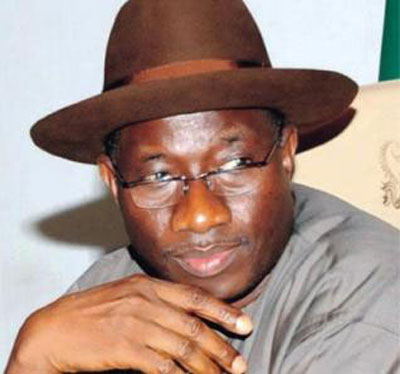 Jonathan He later became governor following the impeachment of Alamieyeseigha, and then running mate to Ahaji Umaru Yar'Adua of the Peoples Democratic Party, PDP, in the Presidential election of 2007. His promises Early this year, Jonathan promised to give Nigerians a new power plant which will begin to add to power generation capacity. "We are committed to providing constant electricity to the nation at large due to the ripple effect it had in expanding economies. Our first commitment is to stabilize the little we are generating, and make sure that there is efficient means of transmission and distribution. The roadmap for the power sector reforms that will last gives the blueprint of what we intend to do. We want to involve the private sector maximally in power generation and distribution, so that any step we take in the power sector will not relapse. "I shall strive to the best of my ability to attain self sufficiency in food production. Let the word go out that my plans for a Sovereign Wealth Fund with an initial capital of $1billion will begin the journey for an economic restoration. This restoration will provide new job opportunities and alleviate poverty. "Our health sector will receive maximum priority in a new Jonathan administration, a priority that will ensure maximum health care and stop our brain drain. I will re-train, revamp, and motivate the civil service. "I have come to launch a campaign of ideas, not of calumny. I have come to preach love not hate. I have come to break you away from divisive tendencies of the past which have slowed our drive to true nationhood. I have no enemies to fight. You are all my friends and we share a common destiny. Let the ordinary Nigerian be assured that President Jonathan will have zero tolerance for corruption" Mallam Nuhu Ribadu Action Congress of Nigeria, ACN The man that will remake Nigeria? 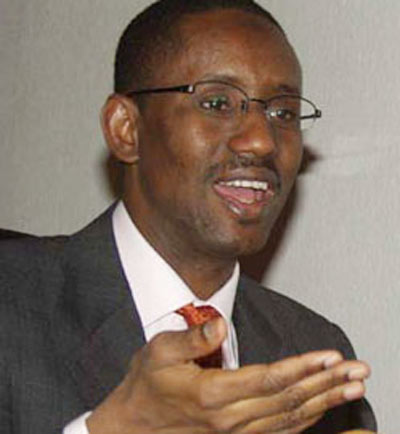 Ribadu Until now, no one imagined that the hunter of economic saboteurs who later became the hunted would, one day, join in the race to rule Nigeria. Nuhu Ribadu was born November 21, 1960 and was called to the bar in 1984, before joining the Nigeria Police, where he rose to become head of the Legal and Prosecution department, Police Headquarters, Abuja. His 18-year service in the Nigeria Police culminated in his appointment as pioneer Executive Chairman of the Economic and Financial Crimes Commission (EFCC) in April, 2003. He was a key member of the Economic Management Team in from 2003 to 2008 that initiated and drove the wide ranging public sector reforms, which laid the foundations for the socio-economic rejuvenation of Nigeria. Ribadu's modest achievements in EFCC, most notable amongst which are the delisting of Nigeria from the FATF List of Non-Cooperative Countries & Territories, admission into the prestigious Egmont Group and the withdrawal of the US Treasury Advisory on Nigeria helped make the EFCC a reference Law Enforcement Agency on the continent; and the bold investigation, prosecution, and conviction of Nigeria's hitherto untouchable politicians and businessmen earned him the reputation of being a foremost and respected anti-corruption crusader in the world. He also has an LLM degree from the Ahmadu Bello University, Zaria, Nigeria and went to the Harvard Business School where he did a program in the strategic management of law enforcement agencies. He is currently a visiting fellow at Oxford University. His Promises Basically, what Nuhu Ribadu is promising Nigerians is total change in the way of doing things. "What do you think I am fit for? I have always been a Federal person. I have experience in public service. I had put 25 years of my life into the service of the Federal Government of Nigeria in the Executive capacity. After that, of course, I served outside Nigeria. I have worked and acquired international experience. It is for you to decide where I fit in best. I had the chance to set up an agency (EFCC); I ran it for five years. I was in an Economic Team. I was a Federal Prosecutor, probably more than any other person in that capacity. I was a police officer, a community worker, I put all my life into public service at the Federal Government level. It is only natural for you to really put that into where the experience can best count. I want to remake Nigeria. The point is: Remake means a new thing, a fresh thing, a fresh hub, a chance for us to love ourselves to build a nation out of our own country. I want to immediately, instantly provide those basic things. They are so important to us. I must insist that we must have security immediately, instantly there is no time to waste on that. I want to see that we can immediately solve the problem of power. "I want to make a full stop to corruption finally. I want to ensure from now on that Nigerians are going to enjoy free and fair education. I want to ensure that we will have good and decent hospitals. We will have hospitals, we don't have to go out of the country and spend our money to build others like in India, Egypt and Ghana. Time has come for us to build our own. I want to make sure that this money that goes out as school fees that we go to pay in the UK, Ghana, and everywhere is going to stop immediately. We must have the schools that will give us the best in our own country. I want to see that Nigeria will be able to give jobs to its young ones. I want to see a Nigeria that probably will have the chance to industrialize. I want to see a Nigeria that will give justice to its own people; justice across; justice that can give a chance to us to have peace and stability for us to grow. I want to see the possibility of giving our country opportunity of equal treatment, fairness, respect to people. I want to see if it is possible for us to give a leadership that can listen; leadership that can take advice; leadership that is going to be collective. In other words, I want a new Nigeria. A new Nigeria is possible and there is no time to waste at all. Like I said the detailed programmes will come out. We are going to be precise and very clear programmes and policies on how to go about it. Muhammadu Buhari Congress for Progressive Change,CPC A stubborn contender For the third consecutive time, General Muhammadu Buhari is contesting the presidential election in Nigeria. He was born in Daura, Katsina state, on December 17, 1942. He was the military ruler of Nigeria December 31, 1983 – August 27, 1985. 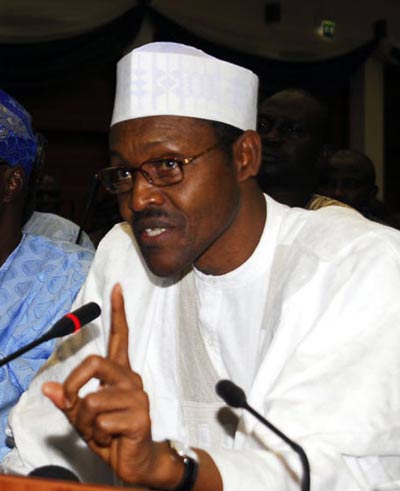 Buhari Buhari first came to limelight in 1975 when he became the Minister for Petroleum and Natural Resources under then-Head of State General Olusegun Obasanjo. Before then, he was the Governor of the newly created North Eastern State of Nigeria during the regime of Murtala Mohammed. He later became head of the newly created Nigerian National Petroleum Corporation. General Buhari was selected to lead the country by middle and high-ranking military officers after a successful military coup d'etat that overthrew civilian President Shehu Shagari on December 31, 1983. Buhari was appointed Head of State and Commander-in-Chief of the Armed Forces, and Tunde Buhari served as the Chairman of the Petroleum Trust Fund. In 2003, Buhari contested the Presidential election as the candidate of the All Nigeria People's Party (ANPP). He was defeated by the People's Democratic Party candidate, then President Olusegun O.basanjo , by a margin of more than eleven million votes. In the forthcoming elections, Buhari is flying the presidential flag of Congress for Progressive Change, CPC. His promises His vision for Nigeria in the next four years is anchored on ensuring better governance, to improve security, preparing the ground for prosperity and, above all, strengthening our democratic institutions. " Democracy offers us the opportunity to widen the frontiers of freedom, peace and progress. We will respect the letter and spirit of the constitution, and the separation of powers which is designed to preclude exercise of arbitrary powers by the executive. The main task of any new government will be immediately to tackle rampant insecurity across the land. Nigerians do not feel secure in their homes. An over-all security effort will be necessary involving the police, armed forces, civil society, traditional authorities, and the general public to arrest our country's rapid and palpable descent into anarchy. Various options to decentralize and localize policing so as to achieve neighbourhood and community control need to be considered. In this regard, recourse will need to be made to rural constabularies, neighbourhood watch and other forms of local and community based supervision. Deployment, remuneration and discipline would be examined and implemented in the context of their suitability to localities, culture zones, communities and traditions. We intend to be the base for economic activities and the main guarantor of security in the ECOWAS sub-region. Nigeria would be an active supporter of peace-keeping in the AU and the UN. Nigeria would continue to fulfill its international obligations as a leader in Africa and a responsible member of the international community We continuously redefine and strengthen the regulatory environment and simplify processes for businesses, but always ensuring national interest, consumer safety and protection. We intend to make a genuine effort to tackle the problems of Niger-Delta from the roots. The roots of the problems are corruption and the failure of the Nigerian elite to understand the grievances and deep-seated feeling of the people of Niger-Delta. We are going to engage Niger-Delta people together with knowledgeable Nigerians, experts and the oil companies to evolve a systematic solution of these festering crises so that the country can move forward. We will review the activities of the local, state and federal governments with respect to Niger-Delta areas. We will work with community and civil society organizations and get to the root of the problems of democratic choices, environment, healthy living and the restoration of community life. "We will continue with the efforts of containing religious, sectarian and ethnic conflicts by giving strength and funding to the community, traditional and other organizations. We will also establish permanent standing committees set up to resolve or mediate in recurring disputes. Government and its law enforcing agencies must never be seen to take sides in communal or sectarian strifes. "We intend to attack the problem of rampant poverty by reviving agriculture, industries, rail, road and waterways transportation. Ibrahim Shekarau All Nigeria Peoples Party, ANPP How far will he go? The current governor of Kano state , Ibrahim Shekarau was born in the Kurmawa quarters of Kano, the son of a police officer. He was educated at Gidan Makama Primary School (1961–1967), then at Kano Commercial College (1967–1973) and finally at Ahmadu Bello University, Zaria (1973–1977) where he received a Bachelor in Education (BEd) in Mathematics/Education. Ibrahim Shekarau was not considered a serious contender in the gubernatorial elections of 2003 in Kano State. He was overshadowed in his party by Ibrahim Ali Amin, the chairman of the ANPP in Kano State who won the gubernatorial primaries. But being favoured by the National executive of the party including the Presidential candidate of the party, Gen. Muhammadu Buhari and other influential leaders such as Hajia Naja'atu Bala Muhammad and Alh Haruna Dan Zago , Shekarau replaced Amin who later decamped to the Peoples Redemption Party PRP and later to the Peoples Democratic Party PDP. In April 2003 Ibrahim Shekarau won the general gubernatorial polls in Kano state. His promises Ibrahim Shekarau said his election symbolised the answer to the dreams and aspirations of "fellow men and women who believe an elected official should not amass wealth but tackle the challenges facing the country. "The PDP government has been promising to improve power supply for twelve years but it has failed to deliver in spite of the billions of naira spent. Perhaps the promises were not meant to be fulfilled in the first place. The PDP government has made a promise to fight corruption and ensure transparency. That promise is yet to be delivered. It has also promise to ensure rule of law, yet lawlessness is what is persistently holding swings in some area s of the country. PDP has repeatedly in many state installed itself in power even when it did not win election. There is corruption in PDP and it is time for the PDP to go. " You must give ANPP a chance to lead this country in 2011. I promise you that if elected as president in the forthcoming elections, I will make the expected changes that will turn things around for good in Nigeria." Pat Utomi: Social Democratic Mega Party, SDMP Man of ideas in the ring In the economic sector, the name Pat Utomi rings out loudly. He has a high profile reputation obtained through being a notable newspaper columnist, political influence and power during a brief tenure as Presidential Special Assistant, social security and career success attained through becoming a Captain of Industry. He was born in 1956 into a disciplined Catholic background and studied both in Nigeria and Overseas. Within a few months of his return to Nigeria from Bloomington , United States where he did graduate work, he got enlisted by the former Vice-President, Alex Ekwueme to provide consultancy on some public policy papers and as soon appointed Special Assistant by former President, Shehu Shagari – a position he lost following the military coup of December 1983, which terminated the Second Republic . In 1986, he joined Volkswagen of Nigeria PLC (VWON) as the Corporate Affairs helmsman, rising to become the reputed organization's Deputy Managing Director in 1991. This man of ideas who has made his name in academia, industry and political commentary is one of the latest entrants into the dark and murky waters of Nigerian politics. He succumbed to pressures from his conscience and also from his many admirers to enter the ring and fight, rather than adopt the usual stay- by- the- sidelines-and-criticize approach which characterises our intellectuals and social critics. The professor tried to use the Restoration Group, an offspring of the Concerned Professionals as a springboard to Aso Rock in 2007 but failed. Now, he is on the march again to making history in 2011 presidential elections on the platform of Social democratic Mega Party, SDMP. Promises Professor Utomi in a statement, entitled "I dare to dream", said he would tackle the problems of power, health, education, unemployment, bad economy, security and agriculture if elected as president of Nigeria in 2011. He said: "Not to dream will be a curse. Sure it has to be the imperative of being to dream of new beginnings if 80 percent of teachers fail the exams set for their pupils who only manage 2 to 20 percent pass in NECO and WEAC examination. "It is a statistic of anguish that has led me to dream to dare to dream of new ways of accelerated teacher education and retraining of quality teachers and incentive schemes that will invest high bonuses in teachers whose pupils score certain grades in cheating free external examinations. "Provide extraordinary grants for tertiary institutions that develop applied technology courses that makes graduate hotly employable or ready to create ventures as entrepreneurs. "Banishing today's blackouts not just that the quality of life rise because we can watch television in comfort but so that the vulcanizer and battery charger do not have to invest 60 percent of their start up capital in 'I better pass my neighbour generator Dele Momodu National Conscience Party,NCP Opposition to his rescue Dele Momodu was born May 16 1960. He was named Ayobamidele meaning "my joy has followed me home' and is the last of three siblings. He lost his dad at the tender age of 13 relying on his mum, and relatives for support. Dele was taught by his late mum, who died on the 18th of May 2007 not to despair even when times are tough. This was exemplified by her continual support of him even when others had written him off, She had given him up to a third chance at passing his WASCE . Although his mum's source of income was from petty trading, and with two older children to care for, she laboured hard to sustain her family, and in the words of Dele Momodu 'She didn't give up on me'. Dele Momodu is a graduate of University of Ife, now Obafemi Awolowo University, Ile-Ife, 1982, Dele holds a degree in Yoruba and a Masters degree in English Literature in 1988. He lectured at the Oyo State College of Arts and Science in Ile-Ife, between 1982-83 while on National Service. Between 1983-85, he was private secretary to the former Deputy Governor of Ondo State, Chief Akin Omoboriowo. Following his resignation from the Motel Royal, he went on to study for his post-graduate degree in English literature. He was during this time contributing articles to the likes of The Guardian, Sunday Tribune and other Nigerian based publications. In May 1988, Dele Momodu got his first job as Staff Writer with the African Concord magazine, owned by late Chief Moshood Kashimawo Olawale Abiola. A year later, he was transferred to Weekend Concord as a pioneer staff. He wrote the first cover story for the paper in March 1989. He also contributed to other publications such as the National Concord, Sunday Concord, Business Concord and the Yoruba newspaper, Isokan. In May 1989, he became Literary Editor. Within six months, he became News Editor of the Weekend Concord. Between May 1990 and September 1991 edited May Ellen Ezekiel's Classique, a celebrity magazine, an appointment which made him the highest paid editor in Nigeria. He resigned and tried his hands on doing business as a bread distributor for his mentor Chief Moshood Abiola, who owned the 'Wonderloaf'. Following this, Dele Momodu started a public relations outfit, Celebrities-Goodwill Limited, which managed the accounts of Chief Moshood Abiola, Dr Mike Adenuga, Mr Hakeem Belo-Osagie and other distinguished Nigerians. In 1993, Dele resigned to join the Moshood Abiola Presidential Campaign Organisation. He was arrested and detained at Alagbon Close in Lagos, after the annulment of the June 12 Presidential election by General Ibrahim Babangida and was severely punished for his views. He was arrested again in 1995 and charged for treason by the Sani Abacha Government. He was accused of being one of the brains behind the pirate radio station, Radio Freedom later changed to Radio Kudirat, after the cold-blooded murder of Alhaja Kudirat Abiola. Dele Momodu managed to escape masquerading as a farmer through Seme border into Cotonou, in Benin Republic, from where he fled to Togo, Ghana and eventually to the United Kingdom. For three years, Dele could not Nigeria. His promises Momodu main plan for Nigeria is abolition of poverty. This, he plans to do through a "10-care programme," which he said will soon be made public. "Our founding father, Chief Gani Fawehinmi, believed that no man was born poor but when you are born into a poor environment where your leaders deliberately decide to make you poorer, then we will be in crises. "One of the reasons we are in the state we are, certainly, is that our leaders have done everything to make us poor. I was at a local airport recently and saw many women waiting for President Goodluck. I discovered they were recruited to come and welcome Mr President and they were paid N1,000. When a nation gets to a stage where you can get able bodied people on the streets for just N1,000, that nation is in trouble and I am fortunate to be in a party that believes its priority is 'abolition of poverty. "Nigeria's poverty is not lack of resources but lack of productive ideas by those controlling the nation's affairs. If the president of an oil-rich nation goes to another oil-rich nation for medical treatment, it is a clear example of poverty of ideas. UAE leaders used to go to Lebanon to enjoy life but they realised they have to build their own nation when war broke out in Lebanon. Our leaders also do that now but they don't realise they have to build this nation. These, including bad governance, bad roads and Niger Delta question amongst others are what NCP would address." |
--
You received this message because you are subscribed to the "USA-Africa Dialogue Series" moderated by Toyin Falola, University of Texas at Austin.
For current archives, visit http://groups.google.com/group/USAAfricaDialogue
For previous archives, visit http://www.utexas.edu/conferences/africa/ads/index.html
To post to this group, send an email to USAAfricaDialogue@googlegroups.com
To unsubscribe from this group, send an email to USAAfricaDialogue-
unsubscribe@googlegroups.com

No comments:
Post a Comment