From a passionate critique of discourses on climate change:
Of course it is not settled. We have now come to a new phase in which
opportunist big and small are trying to capture resources especially
Financial resources. It is really big big money. Having spent 5 weeks in
the Boston area and a week in Davos at the IDRC FORUM... I am beginning to
join a few dots ..and this backed with considerable homework ....
Mwanga,Same, Simanjiro, + Coast Region.
Some of the comments here reminds me of senior bureaucrats in Bagamoyo ..
I was trying to explain why we have to respect local knowledge. One of the
Commissioner was shaking his head, (in disbelief muttering "we cannot do
without Foreign Aid") because I said we need to be more "self reliant" and
not need to over estimate "Foreign Aid". I reminded him that if all the
foreign aid was to stopped it would be catastrophic for the bureaucrats.
Our Leaders and bureaucrats are all too willing to accept CONVENIENT
ANSWERS and SOLUTIONS presented by white scientists, lobbyist and yuppies.
(During a VOA interview with Tandika a few hours ago, mention was made
about a certain lady from East Africa , who went to New York to have a
meeting with the President!)
Quickly....to start at the beginning:
There is no community in the world that has not use all its senses +
Imagination+Experience +Questions to ADAPT TO CLIMATE VARIATION ....THERE
HAS NEVER BEEN A FIXED AVERAGE! As a matter of fact there was a period in
the earths history when there was no oxygen). Think of the Sans people in
Southern Africa, the Eskimo ... living in igloos made of ice at a
temperature of -50 C. How much did it cost NASA to have space suits to
with stand such temperatures?
Ask yourselves how is it there is so much of oil in Saudi Arabia if it was
always a desert, or why were there hippos in the Thames if climate never
changed ! We are told that because of climate change the economy of Tz
will shrink by .69% every year until 2050. Does the economy of any country
depend on climate alone?
In CC both the scientific & social dimensions have largely been ignored
... especially in Tanzania. We are busy blaming African women for cutting
down trees and the Maasai for owning so many cattle, and the urbanites in
Dar for using charcoal for cooking, blaming people for the loss of
biodiversity etc ..... How many have raised the question of the abuse of
human rights of Tanzanians in Rural and in urban area! We have many ready
made solutions
What was Dr. Koonin doing the last 40 years ..... if you want to be
charitable let us say that like St Paul, he was struck by the light on his
journey to Damascus !
I AM IN COMPLETE AGREEMENT WITH THIS COMPUTATIONAL PHYSICIST. BELIEVE IT
OR NOT WHEN HE SAYS IT IS A DAUNTING TASKS ....HE MEANS IT. Just think of
a pipe 1 Metre in diameter ....going 30 Km in space, divided by 54 or so
layers of atmosphere .... in one Km let us assume 200 such pipes, lets say
the layers change every 10 minutes ....Can a battery of CRAYS do the job.
Please lets have a bit more humility, humanity and a willingness to learn.
I spent the last few weeks trying to understand the Incas, Mayans and Pre
Aryans in India and the Hadzabes !
opportunist big and small are trying to capture resources especially
Financial resources. It is really big big money. Having spent 5 weeks in
the Boston area and a week in Davos at the IDRC FORUM... I am beginning to
join a few dots ..and this backed with considerable homework ....
Mwanga,Same, Simanjiro, + Coast Region.
Some of the comments here reminds me of senior bureaucrats in Bagamoyo ..
I was trying to explain why we have to respect local knowledge. One of the
Commissioner was shaking his head, (in disbelief muttering "we cannot do
without Foreign Aid") because I said we need to be more "self reliant" and
not need to over estimate "Foreign Aid". I reminded him that if all the
foreign aid was to stopped it would be catastrophic for the bureaucrats.
Our Leaders and bureaucrats are all too willing to accept CONVENIENT
ANSWERS and SOLUTIONS presented by white scientists, lobbyist and yuppies.
(During a VOA interview with Tandika a few hours ago, mention was made
about a certain lady from East Africa , who went to New York to have a
meeting with the President!)
Quickly....to start at the beginning:
There is no community in the world that has not use all its senses +
Imagination+Experience +Questions to ADAPT TO CLIMATE VARIATION ....THERE
HAS NEVER BEEN A FIXED AVERAGE! As a matter of fact there was a period in
the earths history when there was no oxygen). Think of the Sans people in
Southern Africa, the Eskimo ... living in igloos made of ice at a
temperature of -50 C. How much did it cost NASA to have space suits to
with stand such temperatures?
Ask yourselves how is it there is so much of oil in Saudi Arabia if it was
always a desert, or why were there hippos in the Thames if climate never
changed ! We are told that because of climate change the economy of Tz
will shrink by .69% every year until 2050. Does the economy of any country
depend on climate alone?
In CC both the scientific & social dimensions have largely been ignored
... especially in Tanzania. We are busy blaming African women for cutting
down trees and the Maasai for owning so many cattle, and the urbanites in
Dar for using charcoal for cooking, blaming people for the loss of
biodiversity etc ..... How many have raised the question of the abuse of
human rights of Tanzanians in Rural and in urban area! We have many ready
made solutions
What was Dr. Koonin doing the last 40 years ..... if you want to be
charitable let us say that like St Paul, he was struck by the light on his
journey to Damascus !
I AM IN COMPLETE AGREEMENT WITH THIS COMPUTATIONAL PHYSICIST. BELIEVE IT
OR NOT WHEN HE SAYS IT IS A DAUNTING TASKS ....HE MEANS IT. Just think of
a pipe 1 Metre in diameter ....going 30 Km in space, divided by 54 or so
layers of atmosphere .... in one Km let us assume 200 such pipes, lets say
the layers change every 10 minutes ....Can a battery of CRAYS do the job.
Please lets have a bit more humility, humanity and a willingness to learn.
I spent the last few weeks trying to understand the Incas, Mayans and Pre
Aryans in India and the Hadzabes !
From: "Chambi Chachage chambi78@yahoo.com [Wanazuoni]" <Wanazuoni@yahoogroups.com>
To: "Wanazuoni@yahoogroups.com" <Wanazuoni@yahoogroups.com>
Sent: Wednesday, September 24, 2014 6:57 AM
Subject: [Wanazuoni] Re: Climate Science Is Not Settled
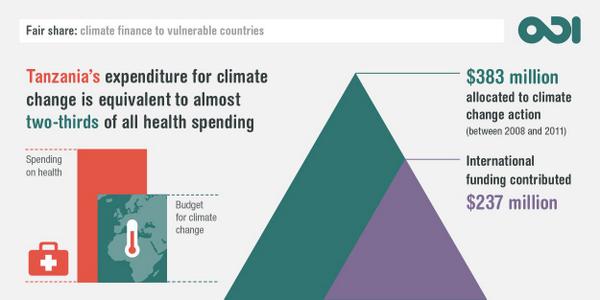
Mdadisi saw this and thought of you!
ODI@ODI_development
06:55 AM - 23 Sep 14
From: "Thabit Jacob thabitsenior.jacob@gmail.com [Wanazuoni]" <Wanazuoni@yahoogroups.com>
To: Wanazuoni@yahoogroups.com
Sent: Tuesday, September 23, 2014 1:27 PM
Subject: Re: [Wanazuoni] Climate Science Is Not Settled
Interesting debate,There is overwhelming consensus among the scientific community that the climate is indeed changing. What still divide between scientists and policy makers is the controversy on the extent to which the world is getting warmer.This is mainly due to the fact that climate change data has considerable levels of uncertainties and reliability of models used in forecasting climate variables is also questionable.Some well-respected climate scientist (IPCC authors) have been accused of cooking temperature data to just the earth is getting warmer. You guys remember the Climate gate email scandal before COP15 in Copenhagen!Well there is a lot of uncertainties and climate skeptics are capitalizing on themThabit Jacob
Assistant Lecturer
Department of Geography & Environmental Studies
College of Humanities and Social Sciences
University of Dodoma
P.o.Box 1716 Dodoma
Phone +255 783 587334Skype: Thabit.jacobTwitter: ThabitSeniorOn Tue, Sep 23, 2014 at 11:15 AM, Baruani Mshale baruani.mshale@gmail.com [Wanazuoni] <Wanazuoni@yahoogroups.com> wrote:Sulle,Dr. Koonin is not rejecting that Climate Change is real, rather he is highlighting the remaining serious disagreements among scientists on predicting future climate change and their impacts and how to advice policy makers in dealing with anticipated climate change. He neatly summarizes current understanding including the current agreement that anthropogenic climate change is real. Its worth a read to refresh oneself of 10+ year old debates.On Tue, Sep 23, 2014 at 11:08 AM, Emmanuel Sulle esulle46@gmail.com [Wanazuoni] <Wanazuoni@yahoogroups.com> wrote:Chambi,I do not want to waste my time reading this. You can just go to Same, Simanjiro, Mbulu, etc and see what the changes in weather patterns show at the moment! Ask elders etc and they can tell what they now see is different from just past 10 years!On Tue, Sep 23, 2014 at 8:56 AM, Baruani Mshale baruani.mshale@gmail.com [Wanazuoni] <Wanazuoni@yahoogroups.com> wrote:Chambi this made me lough. Of course we are settled.I am surprised that Dr. Koonin has just been engaging with the Climate Change Science during this past year, what was he working on during his 40+ science career?there is simply nothing new in his summary and this debate was at its peak about 10 years ago. Now, it is agreed that Climate Change is real and is mainly driven by anthropogenic forces. What remains unclear is projection of climatic changes in the future and projection of their impacts as well. These are known. And scientists and policy makers came with several options regarding policy options:1. taking no action now until there is more scientific knowledge. The downside to this is that, it might be too late to wait until we gather more understanding on future predictions.2. taking "no regrets actions now", that is, taking actions that do not adversely affect current populations while they are positioning us to minimize future impacts and concurrently continue with building scientific knowledge on future climatic changes3. take aggressive actions now that will pay off in the future. The downside to this is that, we are caring too much about future generations at the expense of current generation. What relations do we have with them? How do we know their needs and aspirations? How do we assess their adaptive capacity? What if we are totally wrong thus having affected both current and future generations?And it has been agreed that trying to resolve these issues at the international/global level is futile. We need more regional, national and local level understanding that is more relevant to policy issues at those levels. With this agreement, came approaches such as special programs for small island states, least developed countries etc.All in all, this article is a summary of Dr. Koonin's own learning (rather late) and not about the state of climate change and policy per se. Its over 10 years and there have been a lot of developments and he needs to catch up before he writes.Thats my 2 cents contribution.Baruani--On Tue, Sep 23, 2014 at 8:00 AM, Chambi Chachage chambi78@yahoo.com [Wanazuoni] <Wanazuoni@yahoogroups.com> wrote:Baruani et al. it seems you are unsettled:From: Toyin Falola <toyinfalola@austin.utexas.edu>
To: dialogue <USAAfricaDialogue@googlegroups.com>
Sent: Tuesday, September 23, 2014 12:23 AM
Subject: USA Africa Dialogue Series - Climate Science Is Not Settled
--
Dow Jones Reprints: This copy is for your personal, non-commercial use only. To order presentation-ready copies for distribution to your colleagues, clients or customers, use the Order Reprints tool at the bottom of any article or visit www.djreprints.comTHE SATURDAY ESSAY
Climate Science Is Not Settled
We are very far from the knowledge needed to make good climate policy, writes leading scientist Steven E. Koonin
BySTEVEN E. KOONINSept. 19, 2014 12:19 p.m. ETThe crucial scientific question for policy isn't whether the climate is changing. That is a settled matter: The climate has always changed and always will. Mitch DobrownerThe idea that "Climate science is settled" runs through today's popular and policy discussions. Unfortunately, that claim is misguided. It has not only distorted our public and policy debates on issues related to energy, greenhouse-gas emissions and the environment. But it also has inhibited the scientific and policy discussions that we need to have about our climate future.My training as a computational physicist—together with a 40-year career of scientific research, advising and management in academia, government and the private sector—has afforded me an extended, up-close perspective on climate science. Detailed technical discussions during the past year with leading climate scientists have given me an even better sense of what we know, and don't know, about climate. I have come to appreciate the daunting scientific challenge of answering the questions that policy makers and the public are asking.The crucial scientific question for policy isn't whether the climate is changing. That is a settled matter: The climate has always changed and always will. Geological and historical records show the occurrence of major climate shifts, sometimes over only a few decades. We know, for instance, that during the 20th century the Earth's global average surface temperature rose 1.4 degrees Fahrenheit.Related Video
Tens of thousands of people marched in New York City Sunday to raise awareness and demand action on climate change ahead of Tuesday's United Nations Climate Summit. Photo: APNor is the crucial question whether humans are influencing the climate. That is no hoax: There is little doubt in the scientific community that continually growing amounts of greenhouse gases in the atmosphere, due largely to carbon-dioxide emissions from the conventional use of fossil fuels, are influencing the climate. There is also little doubt that the carbon dioxide will persist in the atmosphere for several centuries. The impact today of human activity appears to be comparable to the intrinsic, natural variability of the climate system itself.Rather, the crucial, unsettled scientific question for policy is, "How will the climate change over the next century under both natural and human influences?" Answers to that question at the global and regional levels, as well as to equally complex questions of how ecosystems and human activities will be affected, should inform our choices about energy and infrastructure.But—here's the catch—those questions are the hardest ones to answer. They challenge, in a fundamental way, what science can tell us about future climates.Even though human influences could have serious consequences for the climate, they are physically small in relation to the climate system as a whole. For example, human additions to carbon dioxide in the atmosphere by the middle of the 21st century are expected to directly shift the atmosphere's natural greenhouse effect by only 1% to 2%. Since the climate system is highly variable on its own, that smallness sets a very high bar for confidently projecting the consequences of human influences.A second challenge to "knowing" future climate is today's poor understanding of the oceans. The oceans, which change over decades and centuries, hold most of the climate's heat and strongly influence the atmosphere. Unfortunately, precise, comprehensive observations of the oceans are available only for the past few decades; the reliable record is still far too short to adequately understand how the oceans will change and how that will affect climate.A third fundamental challenge arises from feedbacks that can dramatically amplify or mute the climate's response to human and natural influences. One important feedback, which is thought to approximately double the direct heating effect of carbon dioxide, involves water vapor, clouds and temperature.Scientists measure the sea level of the Ross Sea in Antarctica. National Geographic/Getty ImagesBut feedbacks are uncertain. They depend on the details of processes such as evaporation and the flow of radiation through clouds. They cannot be determined confidently from the basic laws of physics and chemistry, so they must be verified by precise, detailed observations that are, in many cases, not yet available.Beyond these observational challenges are those posed by the complex computer models used to project future climate. These massive programs attempt to describe the dynamics and interactions of the various components of the Earth system—the atmosphere, the oceans, the land, the ice and the biosphere of living things. While some parts of the models rely on well-tested physical laws, other parts involve technically informed estimation. Computer modeling of complex systems is as much an art as a science.For instance, global climate models describe the Earth on a grid that is currently limited by computer capabilities to a resolution of no finer than 60 miles. (The distance from New York City to Washington, D.C., is thus covered by only four grid cells.) But processes such as cloud formation, turbulence and rain all happen on much smaller scales. These critical processes then appear in the model only through adjustable assumptions that specify, for example, how the average cloud cover depends on a grid box's average temperature and humidity. In a given model, dozens of such assumptions must be adjusted ("tuned," in the jargon of modelers) to reproduce both current observations and imperfectly known historical records.We often hear that there is a "scientific consensus" about climate change. But as far as the computer models go, there isn't a useful consensus at the level of detail relevant to assessing human influences. Since 1990, the United Nations Intergovernmental Panel on Climate Change, or IPCC, has periodically surveyed the state of climate science. Each successive report from that endeavor, with contributions from thousands of scientists around the world, has come to be seen as the definitive assessment of climate science at the time of its issue.There is little doubt in the scientific community that continually growing amounts of greenhouse gases in the atmosphere, due largely to carbon-dioxide emissions from the conventional use of fossil fuels, are influencing the climate. Pictured, an estuary in Patgonia. Gallery StockFor the latest IPCC report (September 2013), its Working Group I, which focuses on physical science, uses an ensemble of some 55 different models. Although most of these models are tuned to reproduce the gross features of the Earth's climate, the marked differences in their details and projections reflect all of the limitations that I have described. For example:• The models differ in their descriptions of the past century's global average surface temperature by more than three times the entire warming recorded during that time. Such mismatches are also present in many other basic climate factors, including rainfall, which is fundamental to the atmosphere's energy balance. As a result, the models give widely varying descriptions of the climate's inner workings. Since they disagree so markedly, no more than one of them can be right.• Although the Earth's average surface temperature rose sharply by 0.9 degree Fahrenheit during the last quarter of the 20th century, it has increased much more slowly for the past 16 years, even as the human contribution to atmospheric carbon dioxide has risen by some 25%. This surprising fact demonstrates directly that natural influences and variability are powerful enough to counteract the present warming influence exerted by human activity.Yet the models famously fail to capture this slowing in the temperature rise. Several dozen different explanations for this failure have been offered, with ocean variability most likely playing a major role. But the whole episode continues to highlight the limits of our modeling.• The models roughly describe the shrinking extent of Arctic sea ice observed over the past two decades, but they fail to describe the comparable growth of Antarctic sea ice, which is now at a record high.• The models predict that the lower atmosphere in the tropics will absorb much of the heat of the warming atmosphere. But that "hot spot" has not been confidently observed, casting doubt on our understanding of the crucial feedback of water vapor on temperature.• Even though the human influence on climate was much smaller in the past, the models do not account for the fact that the rate of global sea-level rise 70 years ago was as large as what we observe today—about one foot per century.• A crucial measure of our knowledge of feedbacks is climate sensitivity—that is, the warming induced by a hypothetical doubling of carbon-dioxide concentration. Today's best estimate of the sensitivity (between 2.7 degrees Fahrenheit and 8.1 degrees Fahrenheit) is no different, and no more certain, than it was 30 years ago. And this is despite an heroic research effort costing billions of dollars.These and many other open questions are in fact described in the IPCC research reports, although a detailed and knowledgeable reading is sometimes required to discern them. They are not "minor" issues to be "cleaned up" by further research. Rather, they are deficiencies that erode confidence in the computer projections. Work to resolve these shortcomings in climate models should be among the top priorities for climate research.Yet a public official reading only the IPCC's "Summary for Policy Makers" would gain little sense of the extent or implications of these deficiencies. These are fundamental challenges to our understanding of human impacts on the climate, and they should not be dismissed with the mantra that "climate science is settled."While the past two decades have seen progress in climate science, the field is not yet mature enough to usefully answer the difficult and important questions being asked of it. This decidedly unsettled state highlights what should be obvious: Understanding climate, at the level of detail relevant to human influences, is a very, very difficult problem.We can and should take steps to make climate projections more useful over time. An international commitment to a sustained global climate observation system would generate an ever-lengthening record of more precise observations. And increasingly powerful computers can allow a better understanding of the uncertainties in our models, finer model grids and more sophisticated descriptions of the processes that occur within them. The science is urgent, since we could be caught flat-footed if our understanding does not improve more rapidly than the climate itself changes.A transparent rigor would also be a welcome development, especially given the momentous political and policy decisions at stake. That could be supported by regular, independent, "red team" reviews to stress-test and challenge the projections by focusing on their deficiencies and uncertainties; that would certainly be the best practice of the scientific method. But because the natural climate changes over decades, it will take many years to get the data needed to confidently isolate and quantify the effects of human influences.Policy makers and the public may wish for the comfort of certainty in their climate science. But I fear that rigidly promulgating the idea that climate science is "settled" (or is a "hoax") demeans and chills the scientific enterprise, retarding its progress in these important matters. Uncertainty is a prime mover and motivator of science and must be faced head-on. It should not be confined to hushed sidebar conversations at academic conferences.Society's choices in the years ahead will necessarily be based on uncertain knowledge of future climates. That uncertainty need not be an excuse for inaction. There is well-justified prudence in accelerating the development of low-emissions technologies and in cost-effective energy-efficiency measures.But climate strategies beyond such "no regrets" efforts carry costs, risks and questions of effectiveness, so nonscientific factors inevitably enter the decision. These include our tolerance for risk and the priorities that we assign to economic development, poverty reduction, environmental quality, and intergenerational and geographical equity.Individuals and countries can legitimately disagree about these matters, so the discussion should not be about "believing" or "denying" the science. Despite the statements of numerous scientific societies, the scientific community cannot claim any special expertise in addressing issues related to humanity's deepest goals and values. The political and diplomatic spheres are best suited to debating and resolving such questions, and misrepresenting the current state of climate science does nothing to advance that effort.Any serious discussion of the changing climate must begin by acknowledging not only the scientific certainties but also the uncertainties, especially in projecting the future. Recognizing those limits, rather than ignoring them, will lead to a more sober and ultimately more productive discussion of climate change and climate policies. To do otherwise is a great disservice to climate science itself.Dr. Koonin was undersecretary for science in the Energy Department during President Barack Obama's first term and is currently director of the Center for Urban Science and Progress at New York University. His previous positions include professor of theoretical physics and provost at Caltech, as well as chief scientist of BP, where his work focused on renewable and low-carbon energy technologies.Copyright 2014 Dow Jones & Company, Inc. All Rights ReservedThis copy is for your personal, non-commercial use only. Distribution and use of this material are governed by our Subscriber Agreement and by copyright law. For non-personal use or to order multiple copies, please contact Dow Jones Reprints at 1-800-843-0008 or visitToyin FalolaDepartment of HistoryThe University of Texas at Austin104 Inner Campus DriveAustin, TX 78712-0220USA512 475 7222 (fax)
You received this message because you are subscribed to the "USA-Africa Dialogue Series" moderated by Toyin Falola, University of Texas at Austin.
For current archives, visit http://groups.google.com/group/USAAfricaDialogue
For previous archives, visit http://www.utexas.edu/conferences/africa/ads/index.html
To post to this group, send an email to USAAfricaDialogue@googlegroups.com
To unsubscribe from this group, send an email to USAAfricaDialogue-
unsubscribe@googlegroups.com
---
You received this message because you are subscribed to the Google Groups "USA Africa Dialogue Series" group.
To unsubscribe from this group and stop receiving emails from it, send an email to usaafricadialogue+unsubscribe@googlegroups.com.
For more options, visit https://groups.google.com/d/optout.Baruani I. Mshale
PostDoctoral Research Fellow,CIFORNairobi--Baruani I. Mshale
PostDoctoral Research Fellow,CIFORNairobi__._,_.___
Posted by: Chambi Chachage <chambi78@yahoo.com>
Reply via web post • Reply to sender • Reply to group • Start a New Topic • Messages in this topic (7) 
.
 __,_._,___




No comments:
Post a Comment