Monday, April 27, 2015

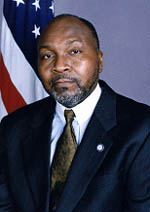
USA Africa Dialogue Series - Re: [kenya-diaspora] Ambassador Joseph Huggin's Compelling Address to Africa Diaspora Stakeholders, Businesses and NGOs; African Government Representatives; and Global Partners on: Leveraging Africa Diaspora Capital and Private Sector Investments for Development. Held in the margins of the World Bank/IMF Spring Meeting with Finance Ministers - April 17, 2015.

Dear Dr. Shem:

Thanks. You leadership is appreciated. 

I have always noted, borne out of experience,  that officials are weary of dealing with country-based Diasporan groups or dismiss them with mild amusements. First of all, the vital access to influence/table an agenda is required, which country-based Diaspora groups do not have. Kenya and other African countries have vested lobbyists and carousers,  if that is necessary for the merry-making, too. So we can't compete as nations even at what we do best - partying, questions and innocuous answers:-))

Powerful American groups meet with the Ministers, as an African bloc to  tout and influence whatever their interests. Of course,  it is understandable for national groups to meet with national delegations, with the courtesies of taking  questions and  hearing  commentaries within a time frame. The  more social aspects are also fine. But there is something we may want to understand. African leaders almost always do not see their Diaspora groups as reckoning entities that make a consequential difference since they are nowhere hear the corridors influencing what matters to them vis a vis strategic geopolitics, which may shape all else.  Whether we like it or not, that is the reasoning.

We had relative success here by identifying some seasoned and serious Africans and groups, if applicable and the bona fide alliance was not for babies lol.  The quality of research impressed  African and AU officials who have taken interest in reading. All these are translatable to country developments but we need a more formidable Africa Diaspora Civil Society presence beyond country limitations. It is also more feasible to get African allies than specific country allies. Again, it will still translate to country benefits. Coming together as Africa to influence an agenda and country prerogatives are not mutually exclusive. In fact, a strong Africa Diaspora benefits country-based groups. 

By the way, the African Institute for Remittances (AIR) was scheduled to be inaugurated in 2015 in Kenya. It is  not for lack of African bankers, researchers, technocrats and  money  senders that the proverbial nobody knows the status of AIR. 

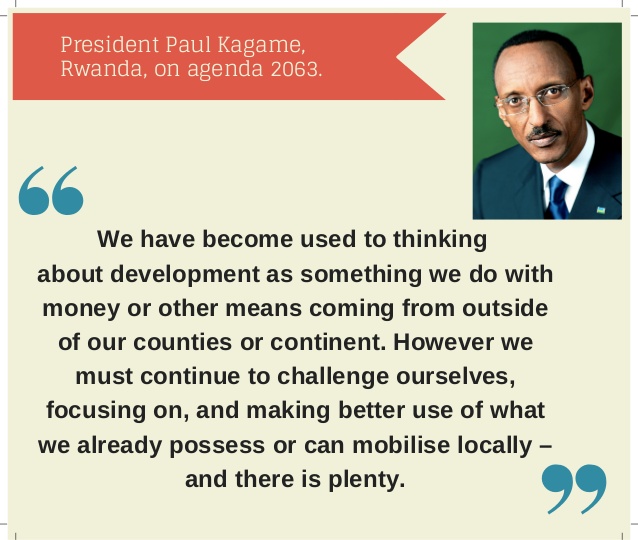
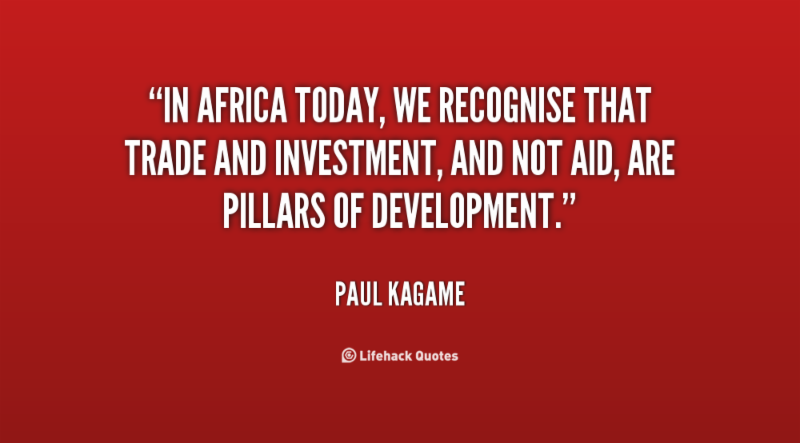
Kagame on stage is so fluent on African developments and the East African narratives. The initiatives can be implemented and replicated in and across African countries. There are some pretty schooled African leaders who understand the need for the African Diasporan in context of African development.

On May 24-25, African Liberation Day weekend, we hope to meet on that way forward. People need not be leaders or members of a group. Individuals only need to be at the level of self actualization.

Where are Dr Marasa and Dada Mulamula? It would be good to contact them.

Best,
MsJoe


To Lead You Must be a Servant


-----Original Message-----
From: Shem Ochuodho shemochuodho@yahoo.com [kenya-diaspora] <kenya-diaspora@yahoogroups.com>
To: kenya-diaspora <kenya-diaspora@yahoogroups.com>; Diaspora Investment Club <dicl-nairobi@yahoogroups.com>; NVK Investment Club <nvk-invest@yahoogroups.com>
Cc: NVK Youth <nvk-youth@yahoogroups.com>; G-47 Kenya <g47-kenya@yahoogroups.com>; PICTA Kenya-LIst <picta-kenya@yahoogroups.com>; info <info@kenyadiasporaalliance.org>; Dr Bernard Marasa <bsmarasa@gmail.com>; Laetitia Mulamula <laetitia.mulamula@gmail.com>; Badawy Ali <badawyali@yahoo.com>; M Mkawasi <mkawasi@yahoo.com>
Sent: Mon, Apr 27, 2015 1:59 am
Subject: Re: [kenya-diaspora] Ambassador Joseph Huggin's Compelling Address to Africa Diaspora Stakeholders, Businesses and NGOs; African Government Representatives; and Global Partners on: Leveraging Africa Diaspora Capital and Private Sector Investments for Development. Held in the margins of the World Bank/IMF Spring Meeting with Finance Ministers - April 17, 2015.

 
That was a powerful speech by Amb Huggins! With KDA & DICL, he's like speaking to the converted. Innovation, technology, Diaspora, lowering remittance costs, leveraging RECs, etc. Just all the right things.

Am glad he singles out Smart Rwanda Master Plan, which I was privileged to be part of its evolution. It is a land-mark instrument; other countries are following suit and taking cue - which is commendable.

I really also hope we can take advantage of the various Bush/Obama initiatives for Africa, and more so the impending trip to Kenya in July by the President. In part for this reason, we are VERY keen to establish a strong presence in Washington DC. Dada Mkawasi, Dada Wams, Nd Sang, ... I hope you're all listening. If you are in/around DC or know someone there who would add value to the KDA/Diaspora agenda, please contact at the earliest opportunity Dr Marasa, Dada Mulamula (presently in DC), Nd Badawy or the Secretariat at info@kenyadiasporaalliance.org.

Thanks MsJoe for sharing the updates, and keep up the good work.

Kind regards,
Shem
 
Shem J. Ochuodho, MSc (Eng), PhD, LLD (Hon)
Senior Advisor
Ministry of Telecom & Postal Services
Republic of South Sudan (RSS), Juba
Author: Dawn of a Rainbow (2012)
Cell: +211-977-232025/+211-955-021-040
Skype: shem.ochuodho


On Friday, 24 April 2015, 5:55, "MsJoe21St@aol.com [kenya-diaspora]" <kenya-diaspora@yahoogroups.com> wrote:


Subject: Ambassador Joseph Huggin's Compelling Address to Africa Diaspora Stakeholders, Businesses and NGOs; African Government Representatives; and Global Partners on: Leveraging Africa Diaspora Capital and Private Sector Investments for Development. Held in the margins of the World Bank/IMF Spring Meeting with Finance Ministers - April 17, 2015.

alt

alt
alt
Click on: Brief Bio

 
Speech by Ambassador Joseph Huggins
Leveraging the Africa Diaspora Capital and Private Investment for African Development
U.S. Congress
Cannon Caucus Room
April 17, 2015
Held in the margins of the Annual World Bank/IMF Spring Meeting
with Finance Ministers.


alt


To your Excellencies, the Ministers here present, to your Excellencies, the Ambassadors here present, distinguished guests, ladies and gentlemen - good evening.  It is my esteemed honor to be with you this evening to discuss an issue that is of grave importance to Africans on the continent and Africans in the diaspora. 


The issue that faces us today is how to leverage the Africa Diaspora Capital and Private Investment for African Development.  Let me offer a caveat, when I speak of private investment in this context, I'm speaking of the Small and Medium Enterprise investors.  We all know that GE, the major hydrocarbon companies, and fortune 100 banks are already doing business in Africa, but what about the others?

 
If we are really truthful with ourselves, we would admit that Africa, with all of its wealth and potential in human capital and mineral resources, represents an enigma.  It's like the magic coin that has the word "Crises" written on one side and the word "Opportunity" written on the other side. 

 
This evening, I'd like to speak briefly on how one set of investors perceive Africa as a continent of crises; while on the other hand, another set of investors look at Africa as a continent of immense opportunities.  The choice for U.S. investors is to decide which side of the coin they are looking at, crises or opportunity.  


For investors looking at Africa through the prism of "Crises," they will say, "Why should I invest in a continent wracked by poverty, where electricity is intermittent, where corruption runs rampant, where political instability and poor governance undermine investor confidence?  More importantly, why should I invest in Africa when wealthy Africans and Africans in the diaspora are not investing in their respective countries?  If they are not putting any skin in the game, why should I?"  Well, to a certain extent, they have a valid point because that has been the stereotypical image of African countries as portrayed by CNN, Fox News, and some in the NGO community. 


What leaders said at the African Union-Economic Commission for Africa Conference of Ministers.

March 30, 2015 in Addis Ababa, Ethiopia.
The reality is, as you know, Africa is the last emerging market with a huge potential for rapid growth.  It is the second largest continent in the world, with nearly a billion people in 54 countries, who have a spending power of $2 trillion.  According to the latest information on global GDP growth rate, seven of the ten fastest growing economies are in Africa ( If asked only for the ranking: 3. Ethiopia, 4. Tanzania, 7. Congo, 8. Ghana, 9. Zambia, and 10. Nigeria).  This is a continent that is resource rich, with 30% of the world's mineral reserves, 45% of the world's Gold, 65% of the world's Cobalt and 90% of the world's Platinum.  


In my travels, the African private sector wants to do business with U.S. firms and investors.  The issue, as I see it, is we are not at the table.  When I say we, I'm just not talking about U.S. investors, I'm also speaking of Africans in the diaspora, who generate a significant amount of capital.  As an example, Africans in the diaspora contribute a conservative estimate of $60 billion each year to Africa in just remittances alone, which plays a vital role in supporting health, education, food security and productive investment in agriculture.   That figure could be higher if the governments in Africa either reduced or eliminated the remittance "Super tax," which could be as high as 12-20 percent on the total amount of the remittance.  Reducing the charges to world average levels and the 5% G8 target would increase transfers by several billion dollars more on an annual basis.  This would benefit the recipients of the remittances even more and could lead to the establishment of more SMEs.


While Africans in the diaspora are investing in Africa's private sector to a certain extent, we can do more, and we are willing to do more in this regard. As we extend our hand to work and invest in Africa, we look to the Africa Union as well as the governments in Africa, the World Bank and the African Development Bank to extend a hand to us in a true partnership fashion because we know that no amount of foreign aid will develop Africa, but trade and, more importantly, investing in human capital and private sector development will.  


The African diaspora, like the lion, must be on the hunt for new investment opportunities and lead the way in encouraging U.S. investments in the following areas:  Information Technology, infrastructure development, developing clean and renewable energy, and focus on early education and training programs to develop workers to handle 21 st century jobs.   There are other areas as well, but we look to our partners to assist in identifying them.


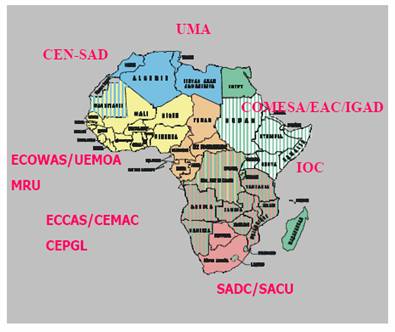
We look to the African Union and the governments in Africa to encourage the strengthening of the Regional Economic Communities and make them more than just a catchy phrase; fast track the elimination of exorbitant customs duties and airline costs to increase intra-Africa trade.  Improve trans-continental highway networks, rail lines and sea ports to increase the import and export of goods and services. Improve the judicial and financial regulatory system to produce a level playing field and reduce corruption.  This would do a lot in increasing investors' confidence.  We must remember for the most part we are talking about potential U.S. investors who have little knowledge of Africa.  The African diaspora can help to calm their fears and educate them to the fact that Africa has the highest return on investment in the world for smart investors. 


I would encourage the World Bank/IMF and the African Development Bank, working with the capital markets, to develop a financial platform where the diaspora could safely invest their capital into various private sector projects to develop the various countries in Africa.  This type of platform would spur more economic development and attract additional investors.  I would also suggest the World Bank/IMF and the African Development Bank play a more aggressive role in expanding ICT on the continent.  

 
In my opinion, information technology is the   Gate-way to knowledge, awareness and dissemination of information that can be shared throughout the continent.  It opens opportunity for everyone to compete in the private sector by offering various services and solutions.  Those countries that have placed a major focus on information technology have seen an improvement in education and health services.


If I can highlight one successful information technology program as an example: The Smart Rwanda Master Plan (SRMP), developed by the government in consultation with representatives of civil society and the private sector, in February 2014, calls for better services to citizens through e-government and ICT education at all levels. The Plan includes a specific focus on broadband networks and tertiary education, as well as fostering investments, innovation and creative local content to strengthen ICT.   This could be studied by other countries and used as a model or develop a specific model for their country.  


The last member in the partnership to leveraging Africa Diaspora Capital and Private Investment for African Development is the U.S. government.  I would have to highlight that under former President George W. Bush, the U.S. government initiate several programs to benefit Africa's development:  The Millennium Challenge Corporation, that provides funding for various infrastructure programs; establishing Regional Export Promotion Centers, or Trade Hubs, to work with regions on AGOA exports, and his most important initiative - the President's Plan for AIDS Relief, or PEPFAR.  


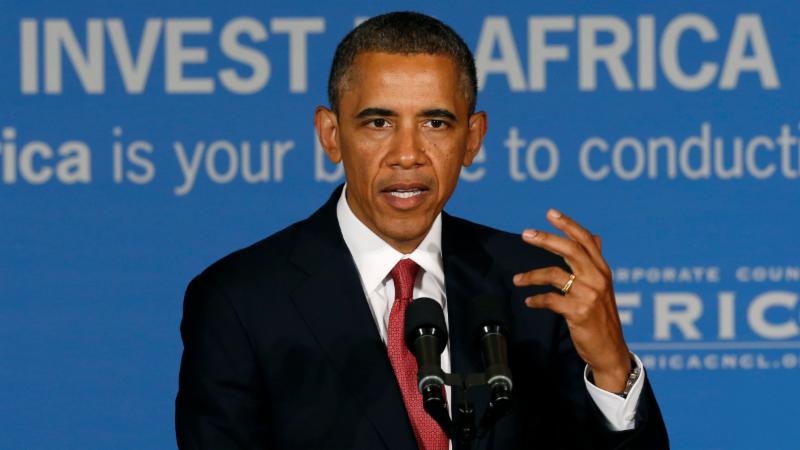
President Obama at the US-Africa Summit in August 2014

 
U nder President Obama, we have the Feed the Future Program to address the global food crisis, especially in Africa, with a $3.7 billion commitment.  Then there is the Power Africa Program, whose goal is to bring a reliable source of electricity to more than 60 million homes and businesses, where the U.S. government will put up $7 billion in funding.  The Young Africa Leaders Initiative is another program, which attracted more than 50,000 applications for 500 fellowship opportunities in leadership training at U.S. universities. The private sector has been an important partner to the U.S. government on this initiative.  This program will help develop the next generation of African leaders thereby ensuring the continents success.


There is always more that can be done, whether it's the diaspora, U.S. investors, the AU, African governments, the World Bank, or others.  What is important is that we make a commitment to ensure Africa's continuous rise in the 21 st century.  A key factor to keep in mind, is that by 2060, over a quarter of the world's workers will come from Africa.  In addition to which the bulk of these workers will be young men and women - younger than their counterparts worldwide.   We want these young workers from Africa to be educated, innovative and mobile, and to compete effectively, thereby ensuring that Africa is the continent of the future.  Let me close by quoting Pliny the Elder, "Ex Africa Semper Aliquid Novi." This is translated as, "Out of Africa comes something always new." 

 
Thank you.  God Bless you, God Bless America, and may God always Bless Africa.


alt


Africa Diaspora Business and NGO representatives  who attended the April 17, 2015 Forum on Leveraging Africa Diaspora Capital and Private Sector Investment for Development will get free services on Capacity Building, Publicity;  Facilitated travel to Africa  for Business and Non-profit operations; or  Strengthening Ties with Africa through Cultural, Educational Exchange and Collaboration.

These services will be provided between June 2015 and March 2016.

SUMMER PROGRAMS

May 23 and May 25, 2015
African Liberation Day Activities

Saturday May 23: 
On the Footsteps of African Liberation Heroes: 
Daring to Chart the Future Symposium and Dinner of Self-Determination

Monday May 25:  
African Women:  Nurturing Visions

Saturday June 6, 2015
Africa Diaspora - Jewish Dialogue with American Jewish Committee

Tuesday June 16, 2015
Day of the African Child

Contacts:
Telephone: 240-706-6885


 T
he second five-year term of office for Mr. Kaberuka, a former Rwandan Finance Minister, comes to a close  in August 2015.  The  African Development Bank's Board of Governors will elect the new President on May 28 during the Bank's annual meeting in Abidjan at the Bank's  headquarters.
The candidates for the next President of the African Development Bank  are:
First row from left to right. 
Akinwumi A. ADESINA, Nigeria's Minister of Agriculture Sufian AHMED, Ethiopia's Minister of Finance;  Jaloul AYED, former Finance Minister,  Tunisia;   Kordjé BEDOUMRA,   Chad's Minister of Finance.

Second row from left to right:
Cristina DUARTE , Cape Verde's  Minister of Finance ;   Samura M.W. KAMARA Sierra Leone's Minister of Foreign Affairs;    Thomas Z. SAKALA,   a Vice President at the African Development Bank , from Zimbabwe;   Birama Boubacar SIDIBE;  V ice President of operations for the Islamic Development Bank , Mali.


alt
alt
Forward this email


Africa Diaspora Civil Society - Vision 2063 Committee | 7915 24th Place | Hyattsvile | MD | 20783
alt


__._,_.___

Posted by: Shem Ochuodho <shemochuodho@yahoo.com>
Reply via web post Reply to sender Reply to group Start a New Topic Messages in this topic (3)

.

__,_._,___

--
Listserv moderated by Toyin Falola, University of Texas at Austin
To post to this group, send an email to USAAfricaDialogue@googlegroups.com
To subscribe to this group, send an email to USAAfricaDialogue+subscribe@googlegroups.com
Current archives at http://groups.google.com/group/USAAfricaDialogue
Early archives at http://www.utexas.edu/conferences/africa/ads/index.html
---
You received this message because you are subscribed to the Google Groups "USA Africa Dialogue Series" group.
To unsubscribe from this group and stop receiving emails from it, send an email to usaafricadialogue+unsubscribe@googlegroups.com.
For more options, visit https://groups.google.com/d/optout.

No comments:

Post a Comment

 
Vida de bombeiro Recipes Informatica Humor Jokes Mensagens Curiosity Saude Video Games Car Blog Animals Diario das Mensagens Eletronica Rei Jesus News Noticias da TV Artesanato Esportes Noticias Atuais Games Pets Career Religion Recreation Business Education Autos Academics Style Television Programming Motosport Humor News The Games Home Downs World News Internet Car Design Entertaimment Celebrities 1001 Games Doctor Pets Net Downs World Enter Jesus Variedade Mensagensr Android Rub Letras Dialogue cosmetics Genexus Car net Só Humor Curiosity Gifs Medical Female American Health Madeira Designer PPS Divertidas Estate Travel Estate Writing Computer Matilde Ocultos Matilde futebolcomnoticias girassol lettheworldturn topdigitalnet Bem amado enjohnny produceideas foodasticos cronicasdoimaginario downloadsdegraca compactandoletras newcuriosidades blogdoarmario arrozinhoii sonasol halfbakedtaters make-it-plain amatha