Saturday, November 11, 2017

USA Africa Dialogue Series - REFORM ERA: Converting the African Union Mandate for Change with Substance: On Community Health, join Hon. Thandi Nhlengethwa of Swaziland


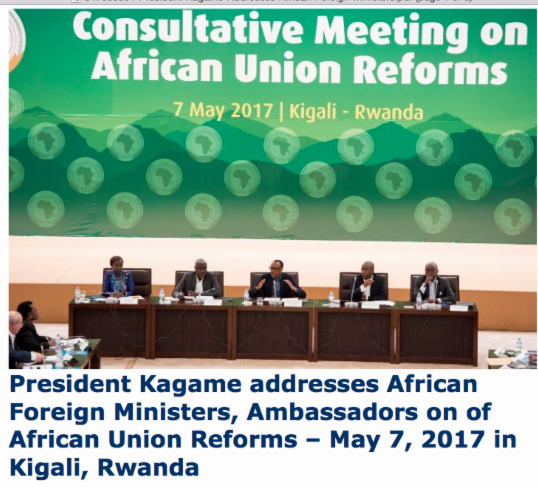
Follow up on African Union Institutional Reform aka the Kagame Report.
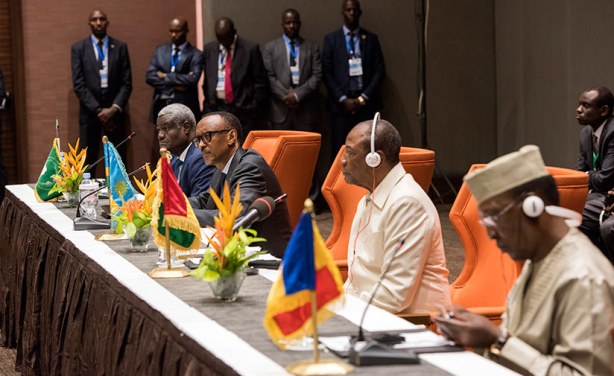
From left to right: H.E Faki Mousa Mahamat, Chairperson of the AU Commission; President Paul Kagame of Rwanda, Africa's Leader on the Implementation of AU Institutional Reform; President Alpha Condé of Guinea, Chairperson of the African Union; President Idris Déby Itno of Chad, Africa's Leader on the AU Theme of the Year: Harnessing the Demographic Divide through Investments in Youths.


Quote from the Report:
Background and Introduction

"As unprecedented challenges multiply and spread across the globe at a dizzying pace, new vulnerabilities are increasingly laid bare, in rich and poor nations alike.

Every country must adapt, but the distinctive feature of recent developments is that even the wealthiest and most technologically advanced nations cannot hope to deal with the changes alone.

Even as the dramatic political upheavals unfolding in many states create new uncertainties about the future of multilateral cooperation, it is clear that effectively confronting issues such as climate change, violent extremist ideologies, disease pandemics, or mass migration requires close cooperation with others, mediated in many cases by focused and effective regional organisations.

This is nowhere more true than in Africa, where the arbitrary internal divisions imposed on us by history, have left us relatively more isolated, both from each other and the world as a whole.

To overcome that legacy, we had to come together in shared purpose and action, first to liberate ourselves from foreign domination, and then to set our people on a path to dignity and prosperity.

Out of that necessity, we are fortunate to have inherited a set of institutions, notably the African Union and its predecessor, that are built on the ideal of African unity, and anchored in the values of respect, tolerance, and solidarity that we share as Africans.

However, the point of African unity has never been about rhetoric alone, but rather the practical need to work together to realise concrete improvements in the well- being and security of our citizens which would be unattainable working as individual entities.

Nevertheless, the unfortunate truth is that Africa today is ill-prepared to adequately respond to current events, because the African Union still has to be made fit for purpose.

The cost of inaction will be borne by our citizens, and measured in shortened lives and frustrated ambitions.

Without an African Union that delivers, the continent cannot progress, and we face the likelihood of yet another decade of lost opportunity.

Tens of thousands of young African bodies have been swallowed by the sea or abandoned in the desert, in pursuit of a decent life for which they are prepared to risk everything, because they believe there is no hope at home. They testify to the urgent need to act.

Continuing to defer necessary reforms to the future is an implicit decision to do nothing. It means giving up on ourselves and our people, tolerating our conditions as inevitable, and accepting Africa's subordinate place in the community of nations as natural.

Yet it has always been Africa's moment. The question, at any given time, is whether we choose to be present and develop the institutional capacity needed to seize the available advantages.

But proof that we can do it is right in front of us. For example, ECOWAS and the East African Community have already made freedom of movement a reality within their regions. Therefore, there is no technical obstacle to extending this principle more widely, as we have agreed to do.

In this context, in July 2016, as an outcome of the successful adoption of the Kigali Decision on Financing the African Union, the 27th Ordinary Session of the Assembly of Heads of State determined that there was an urgent need to accelerate the ongoing reform of the African Union, and decided to entrust the task of preparing a report on the proposed way forward to President Paul Kagame of Rwanda.

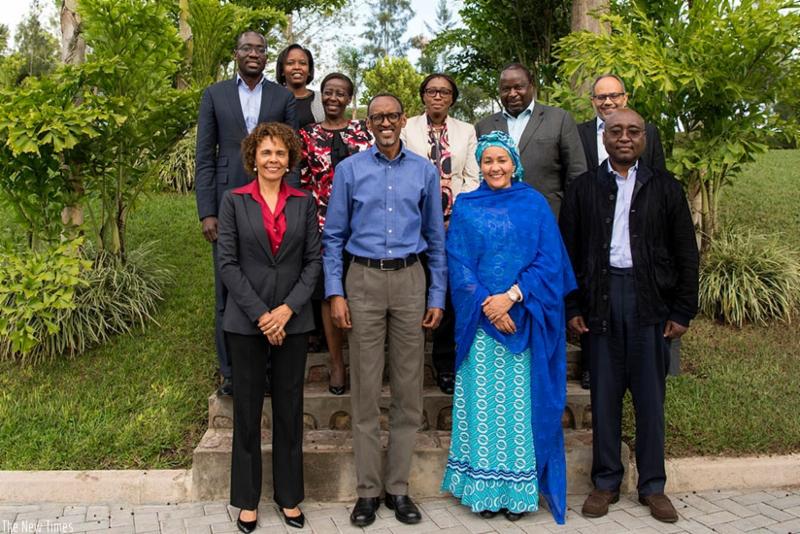
To this end, President Kagame appointed a pan-African advisory team to assist with the review, with whom he held a series of consultative meetings to identify the African Union's strengths and shortcomings, and consider proposals for reform."
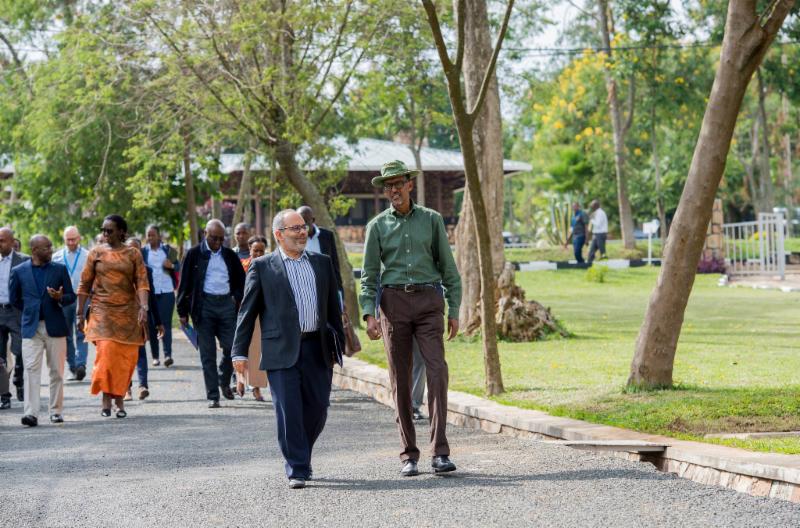
Urugwiro Village where the Office of the President of Rwanda is located in complex in  the Kacyiru area in Kigali. The Team hit the ground running in February 2017, less than a month after delivering their Report, rolling their sleeves and going to work.

All of the Advisory Team members were nationals of AU Member States living in their countries or in the Diaspora.


Hello and Greetings:


At the AU Summit in July 2017, the  African Union (AU) questioned the relevance of the AU Economic Social, Economic, and Social Council (AU), just as the AU had issued an introspective critique of its  own perceived irrelevance to the African citizenry and Member States. 

Reforms were adopted  across the organs. It would not be the first time. Road maps can be drawn but if all of these are unconnected to, and felt by, the African citizenry, it would be another fantastic theory. Implementation is the magic word.

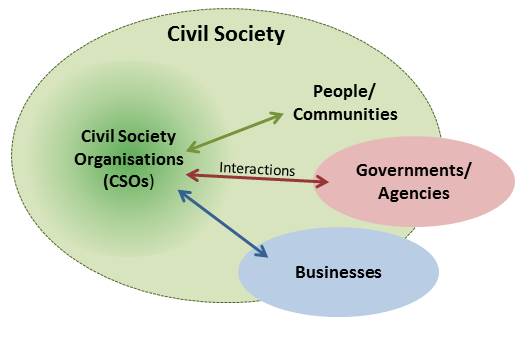
AU ECOSOCC is the organ specifically created to address and channel the aspiration of the African citizenry in the implementation of AU programs, and to facilitate the development of strong and reliable public-private partnerships toward the impact objectives.

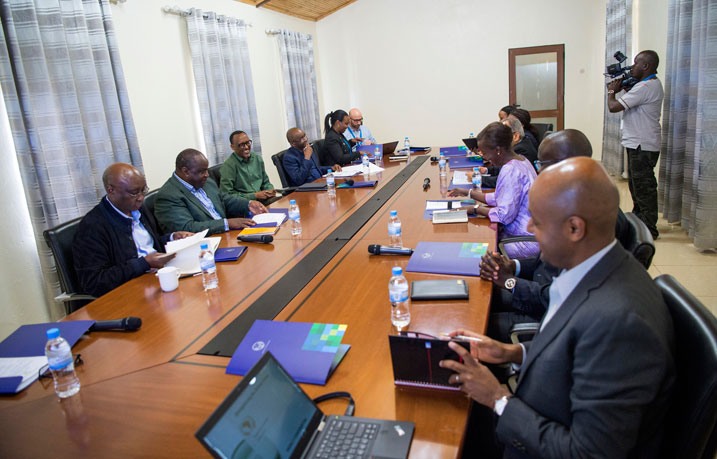
In early November 2017, some members of AU ECOSOCC Standing Committee and invited others met in Seychelles to improve on the  questioned performance. The taste in the pudding is how the organ emerges, communicates, engages, and implements strategies with the wider African citizenry (beyond the selected and sponsored few) living in, and outside, their Member States. Credibility is key.

It can be pleasant departures from the stereotypical image and perception of an incompetent do-nothing AU ECOSOCC. Perhaps, not all Standing Committee Members are more concerned about Daily Subsistence Allowances,  being  invited to places, and a disengaged General Assembly. Perhaps, the sweeping conclusion of an irrelevant AU ECOSOCC talking to itself while the larger African citizenry does not know what it does or talks about, or who the Members are, is too fast an assessment.  

Dare we say, go further and discover professionals and advocates in ECOSOCC who are not into political gimmickry or expediencies, and fair weather alliances. They are ready to serve. However, they need the supportive collaboration of the African citizenry to convert their mandate to milestone accomplishment.

The above values sum up the approach to engage those who are inclined to be honest, who do not substitute objectivity with personalized comfort zones, who inspire by a sense of mission beyond the self and tenure. 

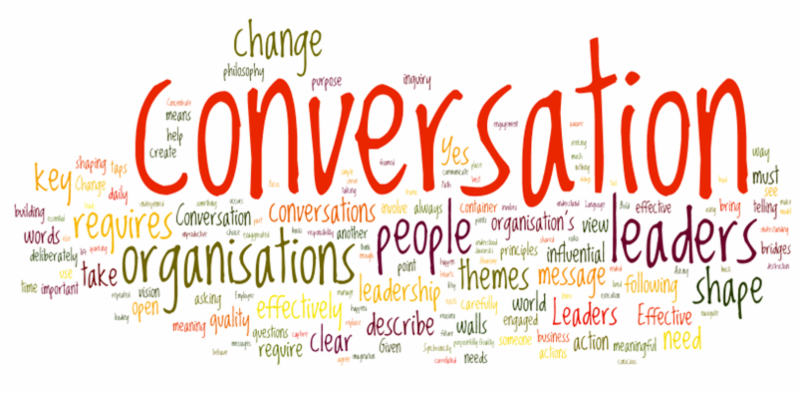
And what good is the metaphorical lamp in the bush? Light the way.....join the conversation on Community Health with the Honorable Thandi  Elizabeth Nhlengethwa of Swaziliand to shape this Platform for the upcoming April 24-28, 2018 Twin Conference on Migration & Development and Trade & Investments for Inclusive Economic Growth and Impact in Africa.

The interrelatedness of both themes is unique and trendsetting. 

And what does it mean: Africa is Rising?


Hon Nhlengethwa brings insightful observations and constructive views on the challenge, which are generating probing discussions.

Based on Member States' definition of the Diaspora, anyone who is of origin from their country but  living outside their Member State is a Diaspora resident. In this example, a Swaziland national living in Lesotho is a Diaspora resident.  In 2006, the AU estimated its Diaspora citizenry to be 50 million based on its Common African Position on Migration and Development. 

Beyond the Diaspora, it is about the Health of the African citizen in general. Therefore, there are two components to the Community Health Platform.

1) Migration impacts the emigrants as well as the host community. The displaced refugee population can be classified as a vulnerable group, especially women and children who may be victims of other cofactors to health risks and may not have access to social amenities. 

This is true in Lyons, France; South Carolina, USA; to Soweto, South Africa. Uganda, with the largest refugee population after Turkey, is considered to have a model program for refugee resettlement.

Generic services, especially mental health, may not be the most effective approach to African migrants' healthcare. This is a crucial factor when health education, prevention and intervention are "Westernized." The approach should be culturally relevant, developmentally appropriate, and language specific as research indicates.

An example in Africa during the Ebola crisis, some residents took to the bushes, on seeing Western health experts, with all kinds of conspiracy theories. Approach matters.

2) Heath is linked to Economics: Is inclusive growth and financing community development related to health?  In view of numerous research publications,  the answer is an unqualified yes. This reality bears out daily: residents in supportive, connected, and economically vibrant communities tend to be healthier. 
 
Let us use what can be referred to as the "social determinants of health."  S. Leonard Syme, celebrated by many to be the modern father of social epidemiology, and his co-author Miranda Ritterman put it directly: "Few topics are more important to health than community development."

So how are Africans and Africa fairing on Goal 3 in Agenda 2063 on Health?  How are foreign donors prioritizing community health if they want to help without other strings attached? 

Research indicates that perhaps the most important contribution that public and private agencies can make, more than seed funds for small businesses or building super markets in the capitals and economic hubs in African countries, is investments for vital and healthier African communities.

These result in the billions  of social savings from fewer visits to the emergency room, fewer chronic diseases and deaths and a population that is more capable of making economic contributions as healthy productive stakeholders. 

The discussions may flow in new and many directions on community economic development fostering healthier population by minimizing the negative social and economic cofactors that contribute to less healthy and more unproductive communities in Africa.

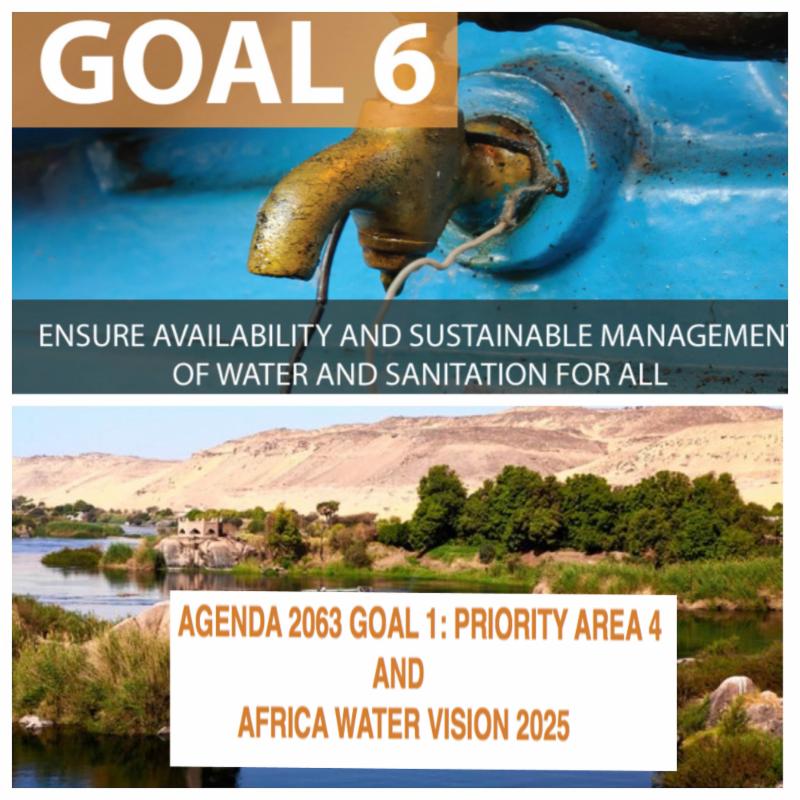
Goal 3 is related to Goal 1: A High Standard of Living, Quality of Life and Well Being for All.

In the picturesque chart when you click the link, the constant contact links take readers to each goal. All the 17 UN Sustainable Development Goals are included in Agenda 2063 Goals.

Here is an example below:


Chronic poverty and lack of basic amenities in the slums in capitals and rural areas, coupled with increasing economic challenges faced by the working poor, beg the question: Is Africa Rising and lifting all? Old and traditional approaches that  focus on just the GDP are not sufficient to answer the question and keep families out of poverty.


Ouagadougou +10  addresses poverty and unemployment reduction from a cross-sectoral perspective, including gender and stable governance.

These  realities indicate that no matter how individual sectors are doing, unless the people living in those neighborhoods can participate in the creation and management of wealth, have means to own the budding facilities, the results will not reduce poverty and unemployment to understand whether Africa is Rising. 

Therefore, inclusive growth, economic improvements must be accompanied by improvement in the quality of life for the poor and the social fabric of the community, which are  related to the quality of health.

How can Diaspora-based health professionals and advocates work systemically and in partnership with African governments to redress some of the plights - and from grassroots know-how that meets the needs of hard-to-reach residents, which include the elderly, the physically challenged, and those who cannot follow medical instructions in any of the official languages, etc?

Based on Agenda 2063, the Diaspora can support financially through government issued bonds, leveraged securities, or direct participation in projects, some of which groups already sponsor and can be incentivized by public and private sectors to enhance results.

The connections and potential synergies are possible  with no small thanks to instant communications,  innovations and intersections in the worlds of community economic development and health. 

On foreign donors, whom we hope to engage as we did in the October 18-20, 2017 conference, how can new research in health be used to shape finance strategies in order for foreign aid and grants to be more effective factors in community revitalization and more successful agents for reducing poverty in Africa?

Join the conversation the Honorable Thandi Nhlengethwa


-----Original Message-----
From: thandile 
To: africanservices 
Sent: Fri, Nov 10, 2017 4:07 pm

Dear Madam Evelyn Joe,

Greetings once again from Swaziland on my behalf and that of TASC my employer.

Your latest communication is greatly appreciated. I note that the April 2018 meeting may be segmented for specific focus on issues of the diaspora, engagements, direction and related discourse. I further note that work experience as value added in broader perspectives of global issues in this case, embracing diaspora agendas, are key elements for moderation in forums as with the recently October 2017 concluded & the one proposed for April 2018. 

The entire African continental states and organs such as the AU-ECOSOCC and others have a dire challenge to work on the mindset of the African citizens, governments and global African diasporas to embrace developmental and cohesive discussions. Capacity enhancement includes repeated exposure to all by all to forums involving such topics for positive change towards a vibrant healthy  brotherly/sisterly togetherness between African citizens in the Diaspora and Africa.

Having already agreed to moderate/chair for sessions as invited, I affirm my response, thank you once again for the vested trust, and confidence, and opportunity to contribute towards shaping the course of direction and strengthening the collaboration between African citizens in Africa and in the Diaspora, and networks.

Kind regards and be blessed.

Thandi  Elizabeth Nhlengethwa
Executive Director for TASC 
Swaziland. Africa
Official member of the 2nd AU-ECOSOCC GA


African Union Diaspora: Actualizing Agenda 2063, 7915 24th Place, Hyattsvile, MD 20783
Sent by africanservices@aol.com in collaboration with
Constant Contact

--
Listserv moderated by Toyin Falola, University of Texas at Austin
To post to this group, send an email to USAAfricaDialogue@googlegroups.com
To subscribe to this group, send an email to USAAfricaDialogue+subscribe@googlegroups.com
Current archives at http://groups.google.com/group/USAAfricaDialogue
Early archives at http://www.utexas.edu/conferences/africa/ads/index.html
---
You received this message because you are subscribed to the Google Groups "USA Africa Dialogue Series" group.
To unsubscribe from this group and stop receiving emails from it, send an email to usaafricadialogue+unsubscribe@googlegroups.com.
For more options, visit https://groups.google.com/d/optout.

No comments:

Post a Comment

 
Vida de bombeiro Recipes Informatica Humor Jokes Mensagens Curiosity Saude Video Games Car Blog Animals Diario das Mensagens Eletronica Rei Jesus News Noticias da TV Artesanato Esportes Noticias Atuais Games Pets Career Religion Recreation Business Education Autos Academics Style Television Programming Motosport Humor News The Games Home Downs World News Internet Car Design Entertaimment Celebrities 1001 Games Doctor Pets Net Downs World Enter Jesus Variedade Mensagensr Android Rub Letras Dialogue cosmetics Genexus Car net Só Humor Curiosity Gifs Medical Female American Health Madeira Designer PPS Divertidas Estate Travel Estate Writing Computer Matilde Ocultos Matilde futebolcomnoticias girassol lettheworldturn topdigitalnet Bem amado enjohnny produceideas foodasticos cronicasdoimaginario downloadsdegraca compactandoletras newcuriosidades blogdoarmario arrozinhoii sonasol halfbakedtaters make-it-plain amatha