Thursday, April 5, 2018

USA Africa Dialogue Series - CALLING THE WOMEN: April 14: Prisoner of Hope; Conscience of Our Time: Nomzamo Winnie Madikizela-Mandela: Tribute from 4pm to 9pm


To Diaspora Organizations, especially Women Representations

Written by Evelyn Joe and on behalf of
The  Honorable Thandi Nhlengethwa,
African Union  Economic, Social and Cultural Council and Chair of program:
The Morning with Women Risen with Reason:
Wearing the Hat of Leadership with a Heart for Inclusive Growth : May 26, 2018

Part of the Pioneering Diaspora Conference: https://conta.cc/2EkOA24


Subject: April 14: Prisoner of Hope; Conscience of Our Time: Nomzamo Winnie Madikizela-Mandela: Tribute led by African women: April 14 from 4pm to 9pm

Recommended
For better pictures, to read, save, or forward, you may prefer the website version:
Dear Avid Reader:
The Voice is not Silent;
its Resonance is Sustained
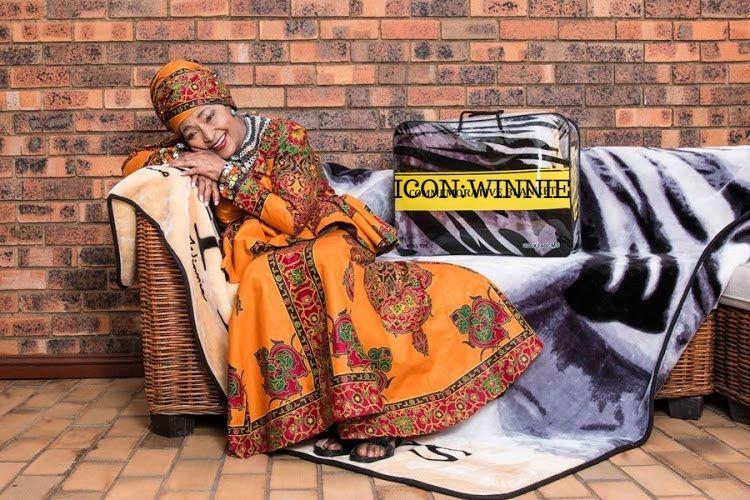
Tribute to an Icon:
 Nomzamo Winnie Madikizela-Mandela: September 26, 1936 -April 2, 2018
Prisoner of Hope, Conscience of Our Time
The Voice is not Silent;
its Resonance is Sustained
Save the date and time: Saturday April 14, 2018 4pm to 9pm in Washington, DC organized by African women and Diaspora organizations.
Venue TBA in a historic African Methodist church facility. For participation and coordination, send email to: africanservices@aol.com
Above:
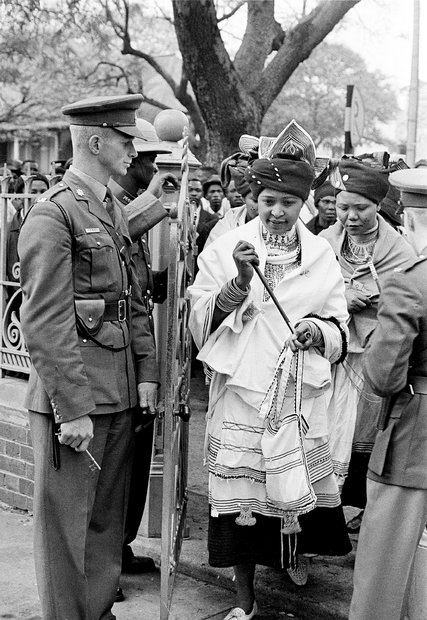
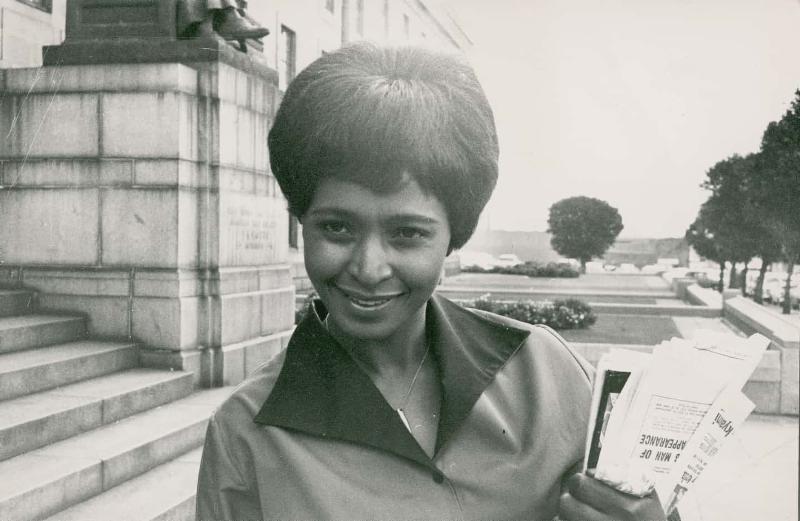
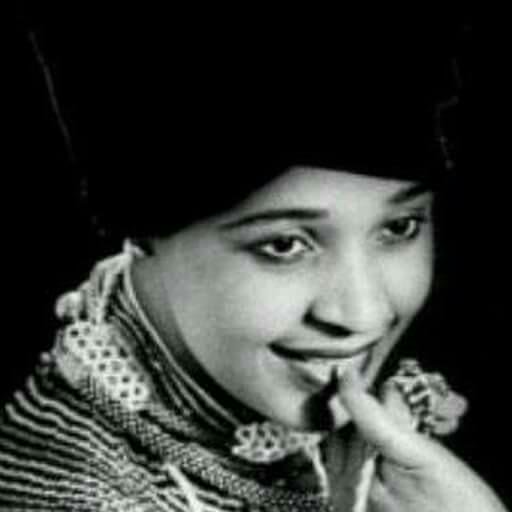
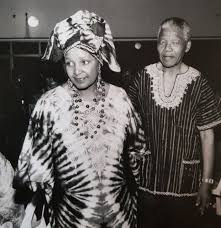
Winnie attends her husband's trial in Pretoria, South Africa in 1962

Above:
In June 1963, she was permitted for the first time to visit her husband in jail. She traveled 1400 kilometers from Johannesburg to Cape Town and another 10 kilometers over choppy seas to Robben Island. The couple was allowed to meet for only 30 minutes, separated by dual wire mesh, no seats, and a security detail in easy listening distance. They were not permitted to speak to one another in Xhosa; only English or Afrikaans.
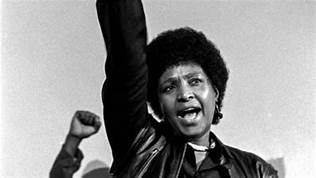
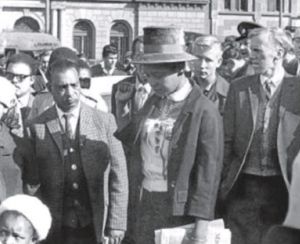
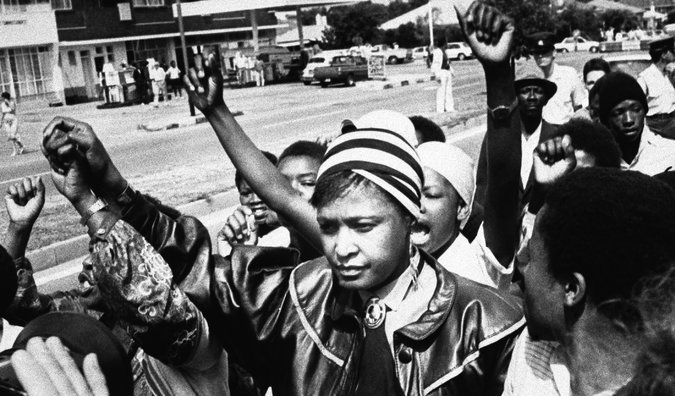
June 15 1964: After the verdict was given in the Rivonia Trial, sentencing eight men, including her husband, Nelson Mandela, to life imprisonment, subdued but the ever-elegant Winnie Mandela left the Palace of Justice in Pretoria with her fist still clenched on.

"We celebrate one of the women who stood when no one else would. From the 1960s‚ until the end‚ you remained an activist and like many of us‚ a prisoner of hope‚ who believed in the realisation of the dream that is the 'rainbow nation'.

In as far as you challenged us and forced us to confront our bitter realities; we are thankful. In as far as you provided counsel to political leaders‚ making them see beyond limited party interest; we have been strengthened. In as far as you stood with those who remain marginalised even as we seek the new nationhood; you are our conscience." Joint statement by Graca Machel‚ chairperson of the Nelson Mandela Children's Hospital Trust‚ along with fellow chairpersons Judge Yvonne Mokgoro and Phuthuma Nhleko from the Nelson Mandela Children's Fund and Nelson Mandela Children's Hospital.

Through the end of this e-Newsletter, you may see priceless moments in pictures.
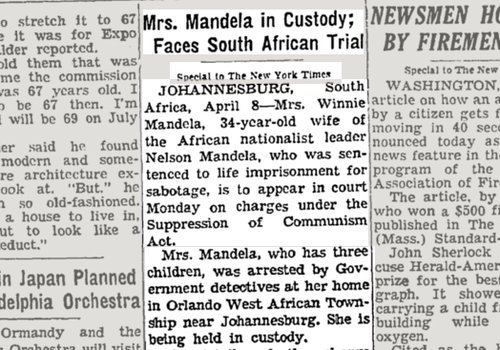
From her highly restricted position, Winnie organized assistance for political prisoners. On the night of May 12, 1969, she awoke to the familiar sounds of a police raid. In the presence of her children, the police made a particularly thorough investigation of everything in her house.

After ransacking the facility, she was whisked away from her daughters and bundled into a police van, for running afoul of Terrorism Act, No 83, which allowed the arrest of anyone perceived to be endangering the maintenance of law and order. She was kept in solitary confinement for seventeen months. For the first 200 days, she had no formal contact with another human being except at her interrogators, among them was Major Theunis Jacobus Swanepoel, a notorious torturer.

With the government's introduction of the 90-day and 180-day detention laws, detainees routinely reported being mercilessly tortured, particularly if they were suspected of acts of sabotage. This was despite a blanket denial by the Apartheid government to the world that any form of torture was taking place. Notorious for interrogations that involved applying torture was a special police unit called the 'Sabotage Squad'.

Swanepoel was one of the most prominent members of staff in this infamous unit and his career, endorsed by the Apartheid state, embodies the actions of the squad. It conducted interrogations throughout South Africa, using methods such as applying electric shocks, brutal assault, burning, breaking bones, hanging the suspect upside-down from an open window in a multi-storey block and making him stand in the same position without sleep or food for long periods of up to 60 hours.

Deaths in detention were usually labeled as 'suicide' or 'died of natural causes'. One of the highest profile deaths in detention was that of Steve Biko in 1977; Biko died of massive head injuries. Evidence supplied at the Truth and Reconciliation Commission hearings substantiates beyond doubt that he was brutally interrogated and tortured to death while in police custody.

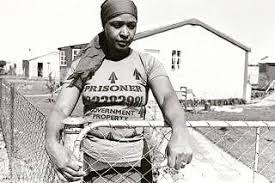
The only items in Winnie's concrete cell were three thin bug-infested and urine-stained blankets, a plastic water bottle, a mug and a sanitary bucket without a handle. The only other feature of her confines was a bare electric light bulb, which burned constantly and robbed her of any sense of night or day. She was given no sanitary pad.

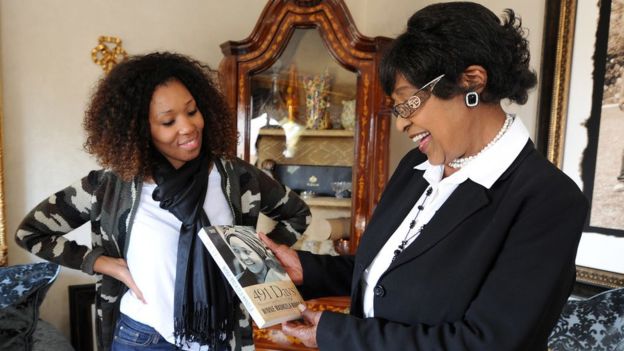
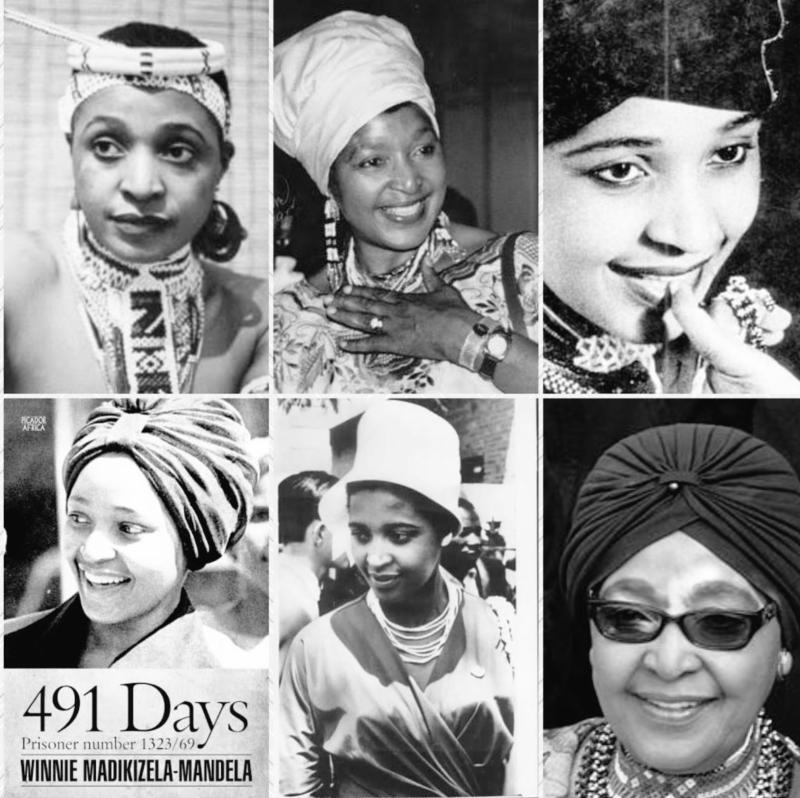
"She was even left in her cell when she was on her period, without sanitary towels. Her cell was adjacent to a torture chamber. "Prisoner number 1323/69" wrote in her diary, which was later published in a book entitled 491 Days, that the screams of women being beaten from across the walls will never leave her mind.

Later, at a time when many other anti-apartheid leaders were languishing in jail or in exile, she not only represented the liberation movement. She was The Movement. When she moved, the frontline moved with her. She did not fill the vacuum left by Mr Mandela. She simply took her rightful place at the centre of the battle for the freedom of black people."Winnie Mandela - the young mother who refused to be broken by Milton Nkosi


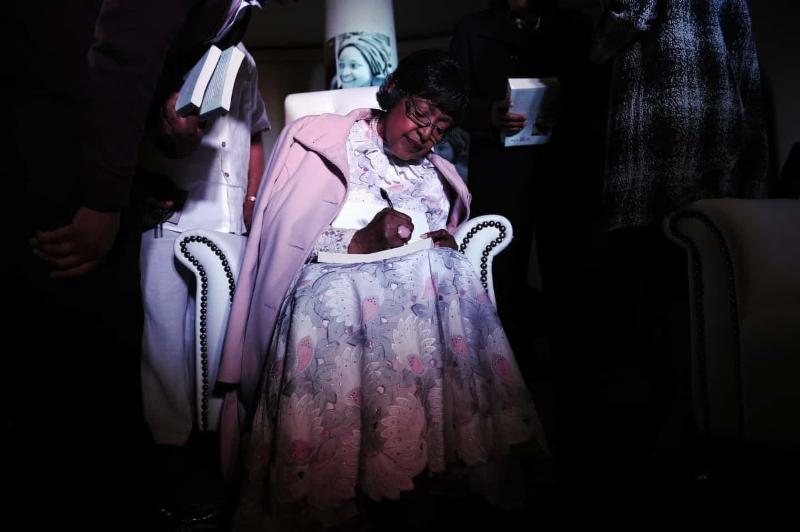
Above: 2013, Johannesburg, the icon signs a copy of her book, 491 Days, at Constitutional Hill. The book recounted her detention by authorities in 1969.
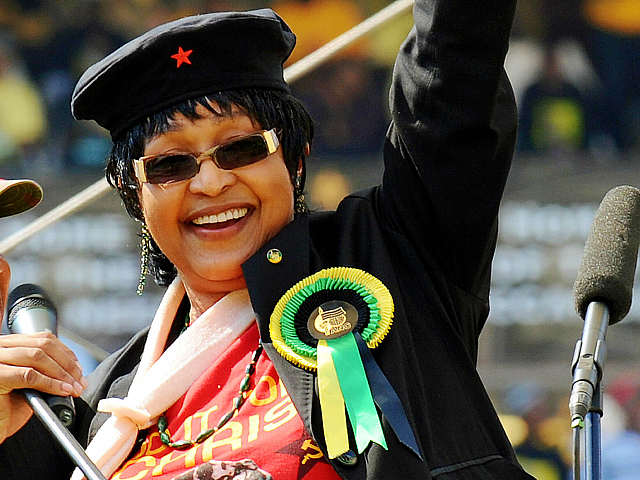
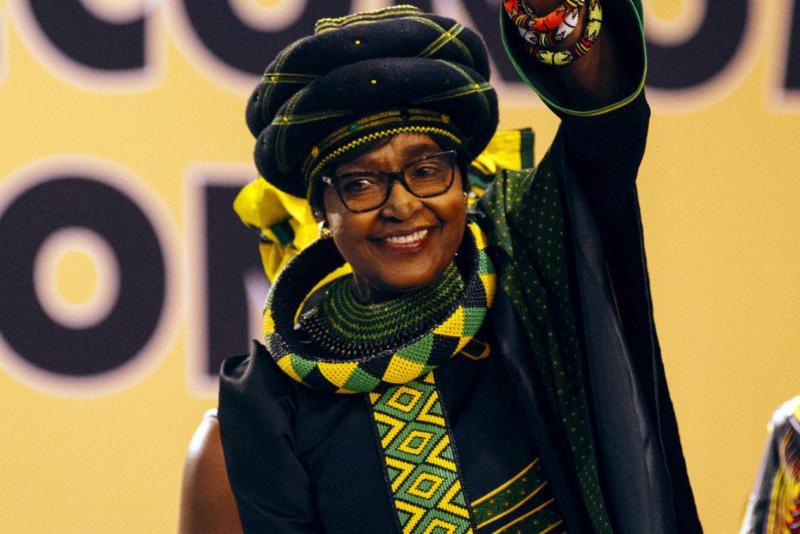
Above: There she waves at the 54th National Conference of the African National Congress, which took place from December 16 to 20, 2017 in Johannesburg, South Africa.

Joyful at the start of the weekend, Mama Winnie attended Easter Friday Mass on March 30, 2018, had lunch with her family on Sunday, and died on Monday April 2, 2018. By all expressed indications, it was a shock - unexpected. She was back in her own words, in reference to her support for an invigorated new African Nation Congress leadership.

South Africa's President Cyril Ramaphosa says a "Tree has Fallen." Indeed, a Baobab. However, the Tree has roots. Their growth is the ongoing regeneration by today and subsequent generations. Each advancement immortalizes her life and path purposely chosen.

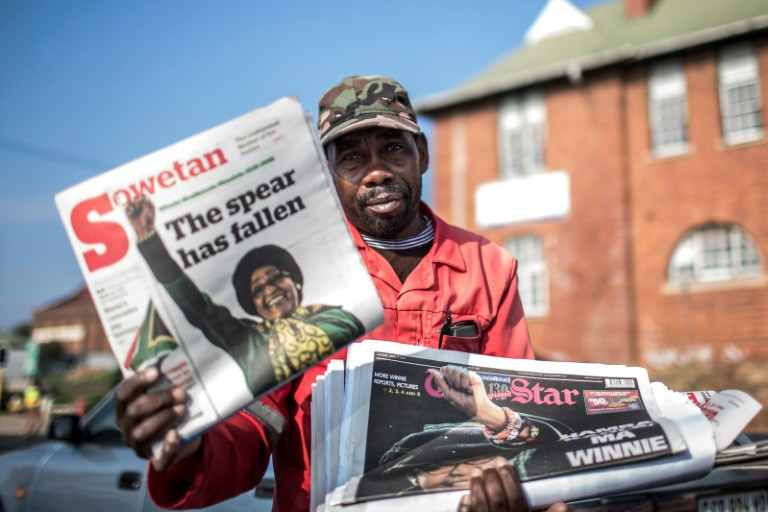
Tributes to Mama Winnie are pouring from all corners of the world, especially from communities scarred by the agony of injustice, buoyed by the thrill of freedom - yet yearning for it because without economic equity, freedom is a continued quest. This truth she spoke relentlessly.

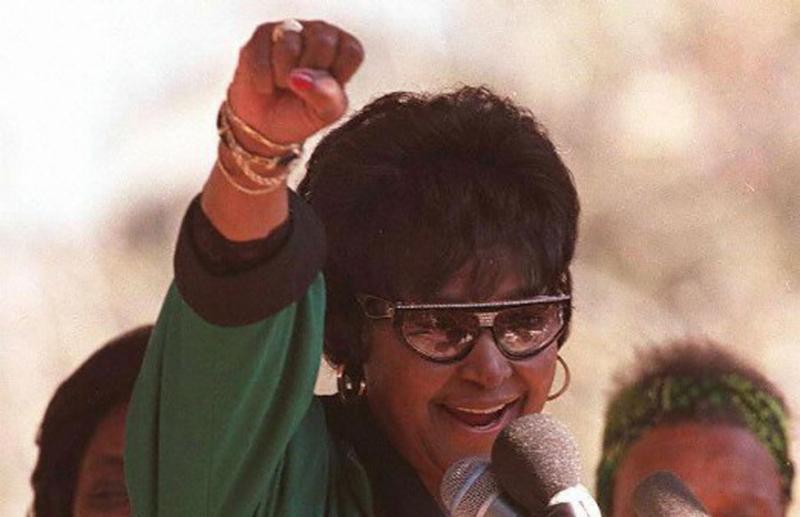
It would be unfair to refer to some of the tributes and leave out most because each is compelling from different dimensions. There are countless pictures that capture her ageless beauty and struggles throughout the ages, which define her life. The fist raised is etched in history, still giving hope, however distant it seems, drowning self-pity to rise again. Many times she was beaten but her head was unbowed. So we, too, honor that purpose.

With the countless tributes, we chose the words of H.E. Graça Machel, the wife of Nelson Mandela, to capture the purpose and immortalized contributions of an icon.

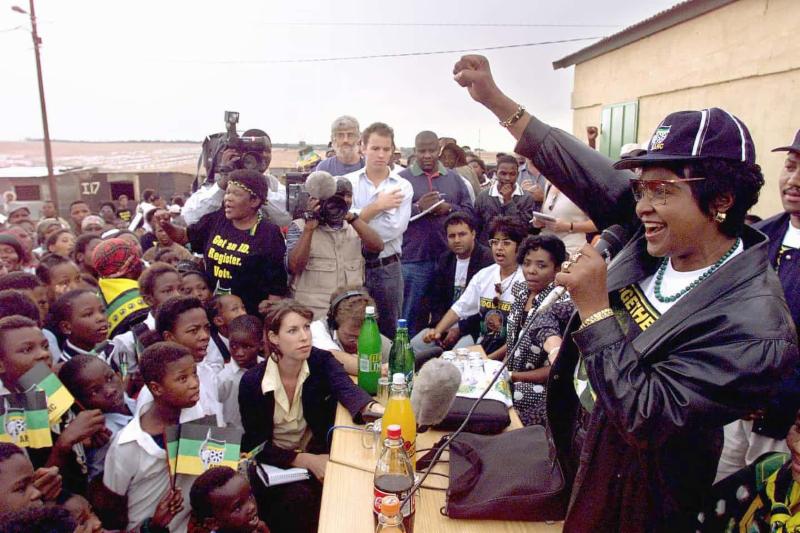
Above in 1999, Olievenhoutbosch Winnie shouts amandla (power) to greet a crowd at a squatter camp near Centurion.
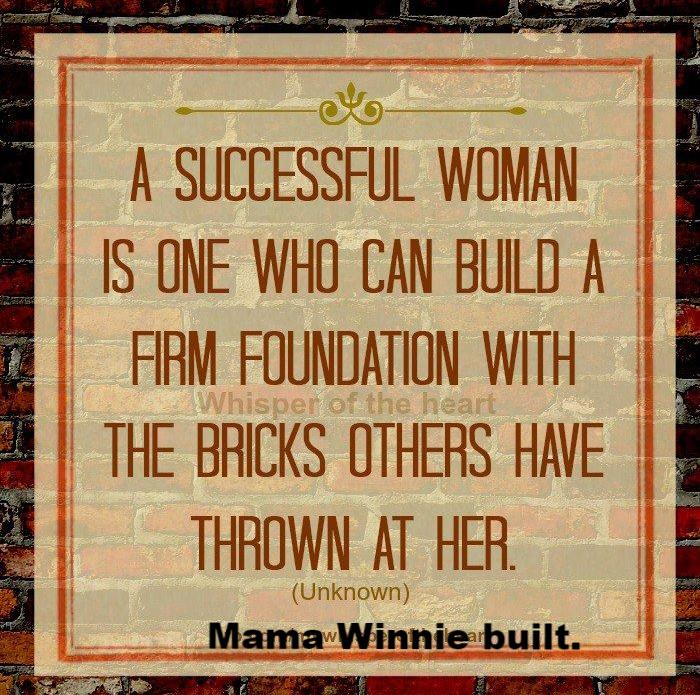
A token, a drop, but who can actually fill the ocean of her cries for the disenfranchised? In a modest acknowledgement, on Saturday, April 14, 2018 from 4pm to 9pm, join African women and organizations, in presence or in spirit, for a community tribute to a heroine who charted paths where none dared to inspire as she was inspired by the forgotten masses.

We can't dare but in our little ways, we know, remember and feel. Most of us never fought the battle of liberation. The liberating ethos probes the conscience not only in a particular place in time. Each barrier to human dignity and rights, in the neighborhood, community, power corridor, invokes the courage of icons like Winnie Mandela. Ordinary people tremble at the affront of power.

But that was not her, her lessons endure for the difference.

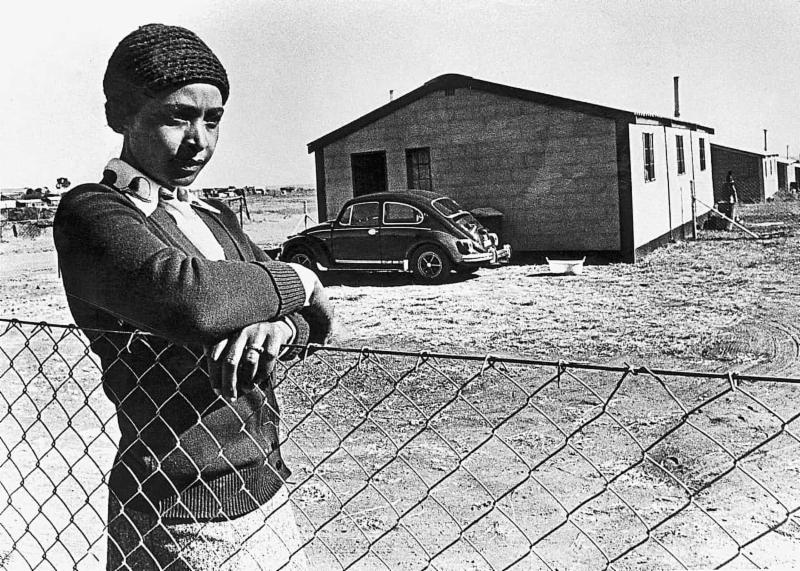
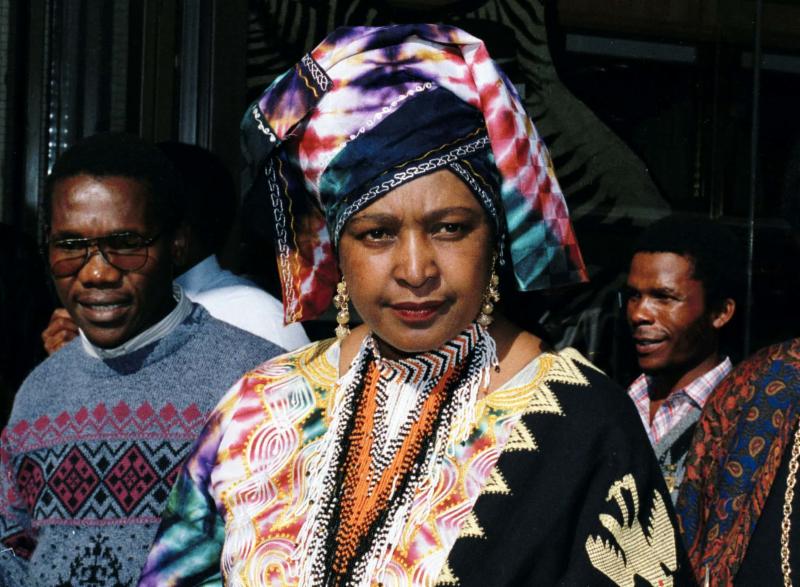
Above 1977: During her banishment in Brandfort


A young woman with dazzlingly beauty in the treacherous world of survival instincts, banished and a target to be silenced, she never blinked for expediency. As a mortal, she made choices that appealed or repelled, so critics have their field. But when the totality of actions are analyzed in the context of Apartheid Struggle, she towers above the field. It is insanity for a disputed part to be the summation of an otherwise resounding life.

Western media has ways of shaping perspectives and reactions, sometimes creating villains and doling accolades based on its constituency interests. For example, they call African leaders who fought for Africa's independence and integration "radicals" while their own brutal people, slave owners, neurotic monarchs are called "founding fathers," "liberators", "enlightened despots." Their leaders are just "eccentric" and "populists" while the same audacity by an African leader would be "mental instability" and "controversial or demagoguery" for censure or sanction.

The article with ironical headline: Why Winnie Mandela could not be forgiven is a MUST READ to grasp the dubious standards: https://conta.cc/2GBs2zZ

Madiba Nelson Mandela was branded a terrorist but had those who never abandoned him. When he gained freedom and leading his nation, the press quarter tried to paint him with a villain brush because he stayed true to those who stood by him. This author rebutted the criticism, unsure whether the same paper would publish it. It did. I have included my piece in this e-Newsletter, reprinted at the celebration of Nelson Mandela's life when he passed on.

The morale: Don't discount your own voice. You can never be too small to act your conscience and tell Africa's story in its context. The media is what it is - if the icon irked in life, the same sources will spoil her finest hours but the world is better off because Winnie Mandela lived and fought so gallantly.

As Esau J. Mavindidze wrote, when Nelson Mandela was jailed, she kept the name of Mandela alive much to the great annoyance of some who went into exile, "publicly ostracized her "radical approach" while sipping "gin and tonic" in the suburbs and talking revolution. Winnie Mandela turned out to be made of stronger fiber than any one had guessed." An article is included from Dr. Victor Okafor for the feel.

Nomzamo Winnie Madikizela-Mandela defined an era; a triumphant farewell reflects the obvious.

If you may, let the trumpets on: LONG LIVE THE SPIRIT OF MAMA WINNIE.

Evelyn Joe


Above: Graça Machel (left) Winnie (right) with and Madiba Nelson Mandela at his 90th birthday. A freedom fighter in her own right, Graça Machel, from Mozambique, is an educator and humanitarian. She is the widow of both former South African President Nelson Mandela and of Mozambican President Samora Machel.

Right: Graça Machel, Winnie Madikizela-Mandela and Nelson Mandela at the his 90th birthday celebration at Loftus stadium in Pretoria in 2008.

Graça Machel has written a heartfelt tribute to her "big sister", Winnie Madikizela-Mandela, calling her a Brilliant wisdom and fierce beauty."

She wrote: "I know you will continue to illuminate our sky, even through the storms and clouds. Your legacy will be an uplifting beacon from which we can continue to draw guidance and strength during difficult times."
(See next segment).


Right: One Nelson Mandela's 86th birthday.

"The extraordinary life you led is an example of resilient fortitude and inextinguishable passion that is a source of inspiration to us all of how to courageously confront challenges with unwavering strength and determination." Graça Machel to Winnie Mandela.
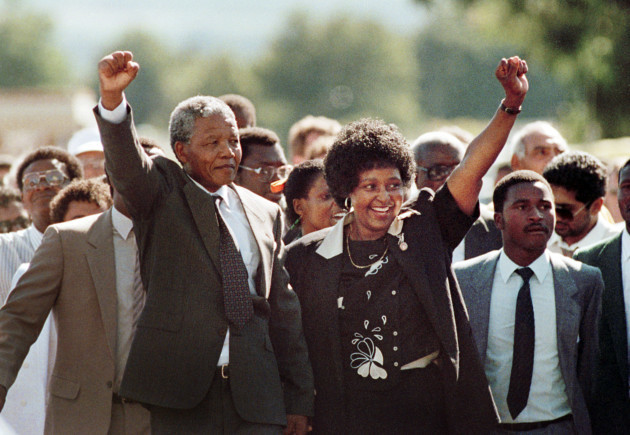
February 11, 1990, Paarl, South Africa.
Nelson and Winnie raise their fists and salute cheering crowds upon his release from Victor Verster prison.

Brilliant wisdom, fierce beauty: Graça pays tribute to her 'big sister' Winnie
Excerpts by Staff Reporter with City Press

Hundreds of mourners gather at Winnie's house to celebrate her life Winnie Madikizela-Mandela: An incredible life in pictures 'Winnie showed that you don't need a gun or be a man to liberate SA' Graça Machel has penned an emotional tribute to her "big sister", Winnie Madikizela-Mandela, saying that she is struggling to accept her death.

Machel lauded Madikizela's "resilient fortitude and inextinguishable passion" and said she hoped that South Africans would be as uncompromising as she was in the defence and protection of our rights.

"As I struggle to accept your transition, I take solace in the fact that you have risen to become one of the brightest stars in the sky where you will remain ever present and radiantly shining," said Machel, describing Madikizela-Mandela as having "brilliant wisdom", "fierce defiance" and "stylish beauty".

"The extraordinary life you led is an example of resilient fortitude and inextinguishable passion that is a source of inspiration to us all of how to courageously confront challenges with unwavering strength and determination," she said.

In an interview with British journalist Mark Austin in July 2013, Madikizela-Mandela said she and Machel were "like sisters ... with very strong bonds, like an extended family." She told Austin of how they spent time together at the hospital bedside. "We call him our husband.

Machel said she hoped that, as the world paid tribute to Madikizela-Mandela, "all of us will internalise the values [Madikizela-Mandela] helped to mould and birth into existence.

"As a nation, I hope we will stand tall and proud, and as uncompromising as you were in the defence and protection of our rights." Machel said Madikizela-Mandela's legacy would be an "uplifting beacon from which we can continue to draw guidance and strength during difficult times".

She said her "big sister" loved the South African people unconditionally and sacrificed so much for their freedom.

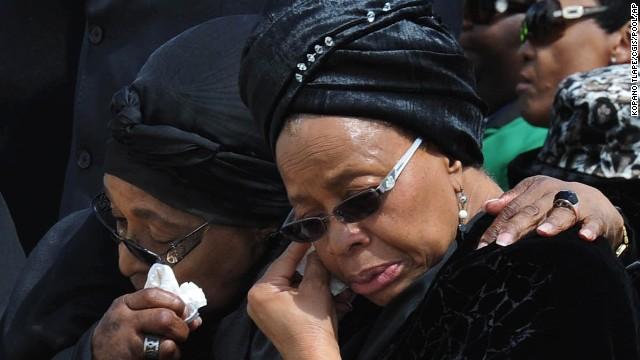
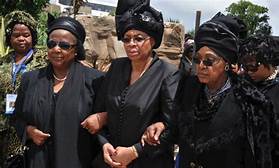
Mama Graça (right) and Mama Winnie (left) at funeral and grave of Madiba Nelson Mandela on December 15, 2013
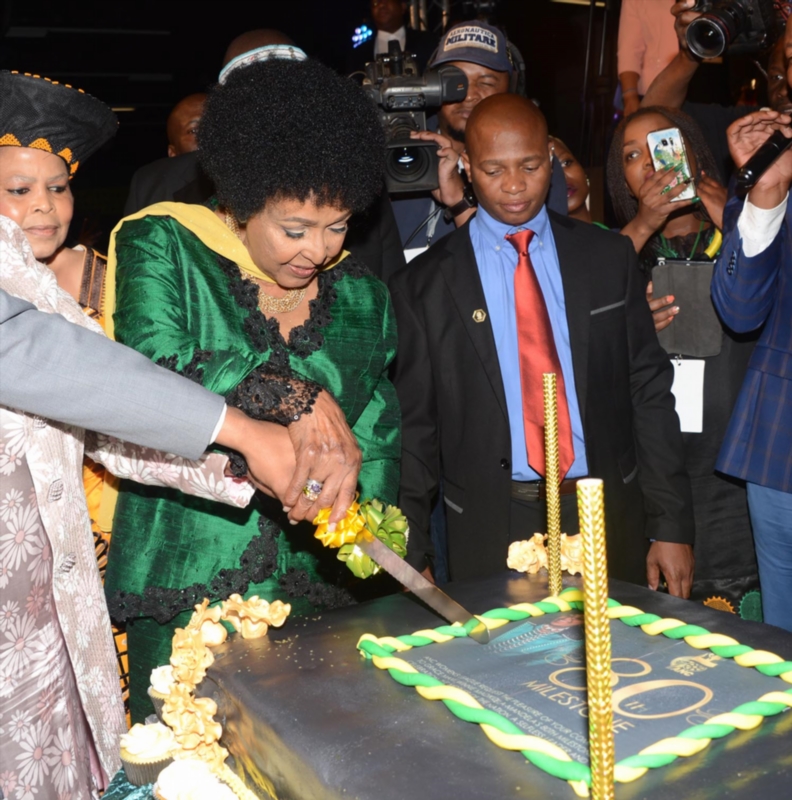
Mama Winnie at her 80th birthday
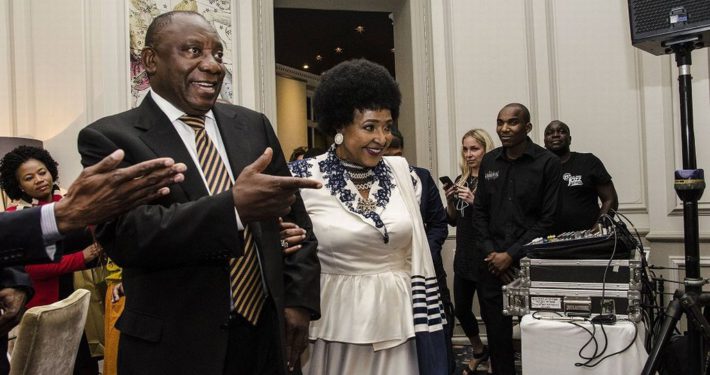
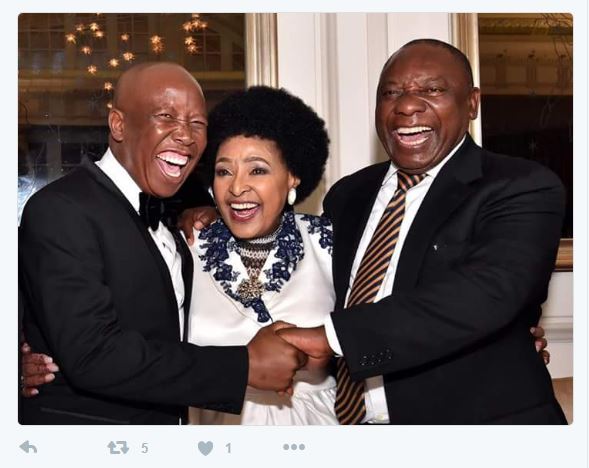
Above: Mama Winnie arrives for her 80th birthday with then Vice President and current President Cyril Ramaphasa. Below with the leader of the Economic Freedom Fighters, Julius Malema, and ANC's Cyril Ramaphosa.
Mama Winnie at her 80th Birthday
In January 2018, the top six ANC leaders visited ANC slawart Winnie Madikizela-Mandela at her home in Soweto to brief her on the party's activities ,to formally present the leaders, and to draw inspiration and counsel according to statements made by ANC.

From: EG Cross
Sent: Wed, Dec 11, 2013 11:51 pm
Subject: RE: [zimsite] Memory Lane on Mandela: When I had to Fight Back..in the Media - by Ms Joe.

Very thoughtful Evelyn
The international reaction has been quite extraordinary and profound and in my personal view – justified.
Eddie Cross
Member of Zimbabwe's Parliament

Hello People:
 By Evelyn Joe

Just sharing a "rebuttal article" published in Washington Times in 1997. It was just one of instances in the era when I had to respond in the "media construction." The media has a way of creating its own reality for mass consumption. When you repeat it, the "gospel" is established. I changed the headline from what the journalist coined to reflect my on thinking. The rebuttal article comes after my reflection of today.  But you can skip to the article.
 
If you were at the Memorial Service for the iconic Nelson Mandela at the National Cathedral, Washington, DC or followed it, as the stirring homily from Rev. Dr. Allan Boesak and incisive response from South African Ambassador  Ebrahim Rasool enveloped the hall,  it was easily conceivable how the innate desire for a just and equitable society, eschewing bitterness yet never losing sight of the principles and miles ahead, is a moral imperative. It is instinctively repugnant when any ideology or religion ignores the diabolism of oppression for any end. 

Mandela was called a Son of Africa in presentations and songs, which conveyed the potential of Africa. The moving moment was also reflected by the Dean of the Diplomatic Corps, Ambassador Roble Olhaye of Djibouti. The human commonality and the act of conscience that brings down walls  were  poignantly delivered by Vice President Joe Biden from experiential knowledge. I flinched at the brazenness that corrupted the soul of the Apartheid authorities in South Africa. 
 
I would have been an expert performer of toyi toyi (the protest dance) or so I felt. But that is in the past. The valor of many around the world - Blacks and Whites, poor and rich ended Apartheid. Yes, even from the ashes of ruins, the broken in spirit can rise. Equity may yet to come to the disadvantaged but journey began. 
What is to be feared, as Ambassador Rasool intoned, is forgetting the struggle when the affront is not as brutal as yesterday - but cruel all the same. "IT AIN' T OVER," the rallying cry of Dr. Boesak captured the essence.

I say to you, the reader: Each person was born with a gift that uplifts. Whether it is a cup of water you give to the thirsty or an ideal you defended for the voiceless, you cannot underestimate the intangible worth of that action.  We may be unique but not necessarily superior. You do not have to be an orator or a warrior. Just be you, rich in your soul with a desire to redress a plight. It could be a person or place.  Your part would be done. 

Now to the rebuttal. The media was abuzz and Nelson Mandela was lambasted for....not toeing some lines. The conservative media - the same outlet that branded him as a terrorist - plucked some nerves. Not so, said me. SMILE. I  simply demanded equal time....taking the fight to the source...so to speak. I responded to the article written by Todd Pitock. He is a journalist and you can visit him at http://www.toddpitock.com/

The South African Embassy sent me a "Thank You." Most of all, my Mom reminded me of this value: It is not whether one succeeds in curing an ill, just don't look the other way. She read both Mr. Pitock's article and my response and said, "you took the fight where it belonged."There were other confrontations or rapid responses via talk shows. But this memory lane is enough for the idea. Have a blessed week everyone.
 
MsJoe
 
Note: To read Mr. Pitock's full article, you have to go to Washington Times, then Archives. Search from October 1 to Nov. 30, 2007. Since it is past 180 days, you have to pay $2.50. I paid to retrieve my response after registering.
 

The Washington Times
Nelson Mandela refuses to pander to Western politics
November 14, 1997 
Section: A
COMMENTARY
EDITORIALS
LETTERS 
Edition: 2 
Page: A22 

Todd Pitock's Nov. 4 Op-Ed column, "Nelson Mandela's `dear brother leader,' " epitomizes the arrogance of the superpower mentality. He begins by praising President Mandela for steering South Africa to become a multiracial democracy. Mr. Pitock marvels at, and perhaps is relieved by, the fact that Mr. Mandela has not stooped to taking revenge upon his former oppressors. Nevertheless, Mr. Pitock expects Mr. Mandela to maintain a shameless, hypocritical allegiance to foreign powers that cared more about their economic exploits than the moral bankruptcy and human indignity of apartheid.

Mr. Pitock characterizes Mr. Mandela's visit to Libya as either "naive and irresponsible" or "savvy and unprincipled." Both depictions are absurd. Over the years, Mr. Mandela has maintained a consistent approach toward global alignment and has refrained from engaging in unethical or immoral acts of political prostitution. His dealings with Libya, the Palestinian Authority and Cuba (and his subsequent dismissal of the unilateral impositions of the United States) display a rare fortitude that is sorely missing in global leadership.

I agree with Mr. Pitock that Mr. Mandela "threw good politics to the wind" by embracing Libya's Col. Moammar Gadhafi. In so doing, Mr. Mandela seized the moral high ground by refusing to pander to "good politics."

Mr. Mandela does not need to qualify or apologize for his positions toward Libya, Cuba or any other nation. Where were all the "concerned" nations in the early and critical days of Mr. Mandela's 27 years in jail, when the African National Congress and indigenous Africans wallowed in hopelessness? And how dare America or Britain rear its head as a moral arbiter?
Mr. Pitock further accuses Mr. Mandela of harboring "residual bitterness" and derides him for declining to answer a question concerning prospects of nationalization in a 1993 meeting with U.S. investors in New York City.

Accordingly, Mr. Mandela lost an opportunity to appeal, woo and appease the very investors he was supposed to court. Mr. Pitock, it seems, cannot fathom that a Third World leader, let alone an African, would refuse to bow to the altar of money or subject his independence to the whims of a superpower.

Mr. Pitock then claims that Mr. Mandela is forfeiting his political capital by allowing assorted "villains" to bask in his "great man's glow." Who is Mr. Pitock to define another nation's friend or villain? His attempt to lecture on Mr. Mandela's role in African matters should be repudiated by Africans.
Upon his visit to Libya, Mr. Mandela hugged Col. Gadhafi. Mr. Pitock says that act was unbecoming of a "saint of our times." That's ridiculous.

Mr. Pitock is injecting self-serving passion into a case of practical reasoning. The fact is, Mr. Mandela made two public trips within a week to Libya. What does it matter how he greets Col. Gadhafi?
Finally, Mr. Pitock says that by exercising his prerogative to determine whom to call a friend, Mr. Mandela has "diminished" his accomplishments and made himself "seem suddenly old and foolish." If anything, Mr. Mandela's ability to shun the avarice of politicking makes him look wise. That wisdom may have come from the age of his experience.
EVELYN JOE
Executive director
International African Foundation
Washington
 

Adieu Winnie Madikizela-Mandela, the Great African Warrior
By Dr. Victor Okafor

A saddened world has just received news of the passing of the superheroine of the decades-old struggle that eventually brought an end to Apartheid in South Africa in 1994. (https://www.cnn.com/2018/04/02/africa/winnie-mandela-south-africa-intl/index.html).
Winnie Madikizela-Mandela, age 81, has joined the ancestors.

While the superhero of that struggle, the late Nelson Mandela was kept in political incarceration for 27 years, Winnie Mandela energetically and relentlessly kept alive the flame of that struggle. It was a turbulent journey for which, at various times, she was jailed, tortured and even banished by the apartheid regime.

But not for one moment did she let the world forget about the prolonged travail of Mr. Mandela, who in 1994 emerged as the first President of a Free South Africa, not long after being released from 27 years of political imprisonment. Not surprisingly, while Nelson Mandela richly earned an accolade of "Father of the Nation," Winnie Madikizela-Mandela also rightfully came to be known as the "Mother of the Nation" of post-apartheid South Africa.

Winnie Madikizela-Mandela was a world figure. Her sacrifices, her resoluteness, her unflinching commitment to a struggle to free her people from the bondage and indignity of apartheid—without caring about her own safety and comfort—produced, in my view, a net effect of helping to steer and influence the evolution and texture of human conscience in the 20th century.

Winnie Mandela fearlessly confronted and spoke truth to power during a period when an arrogant, conscienceless and blood-thirsty Black-loathing apartheid regime in South Africa intimidated many less courageous though decent men and women into obsequious silence. She subordinated her material wellbeing and personal freedom to the human interest/desire of her people to be liberated from the shackles of apartheid.

Indeed, South Africa, Africa and the world-at-large have lost one of the greatest yet selfless political giants that shaped the trajectory of human history in the 20th century. Like her late ex-husband and political warrior (Winnie and Nelson got divorced in 1996), Winnie Madikizela-Mandela's entire life was a life of struggle, a life of living and working for the betterment of others, and not for self. She was a rare gem that embodied intellectual acumen, oratory, political wizardry, a passion for social justice, a deep love of freedom, charisma and physical beauty. Winnie Madikizela-Mandela was one of the most beautiful women that ever lived! Despite all these attributes, she led a humble life and felt at home with the grassroots.

There goes a true warrior, a quintessential political activist, a true daughter of Africa, a jewel, a real-life superheroine! Her journey back to eternal home is one that prodigiously merits a colorful ancestral welcome marked by blaring trumpets, pomp and pageantry. May her great and lion-hearted soul rest in perfect peace!

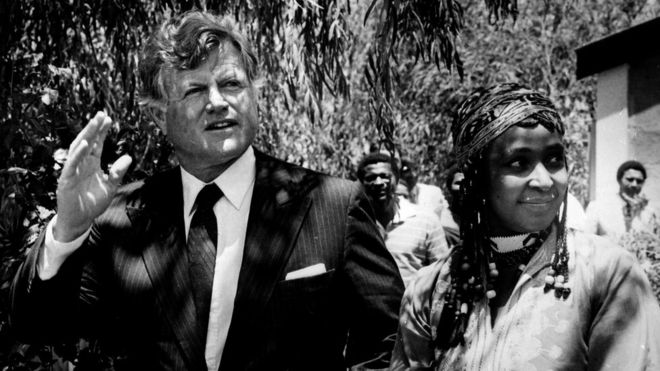
January 1985. Senator Edward Kennedy of the United States visited South Africa to lend his anti-apartheid support to the South African people. He was hosted by the recipient of the 1984 Nobel Peace Prize, Bishop Desmond Tutu.

During his 8-day stay, the US Senator paid a visit to Winnie Mandela in Brandfort, where she was banished. Senator Kennedy said she was "a source of inspiration for people all over the world," describing Winnie as someone who was "very courageous and was very concerned for her country."
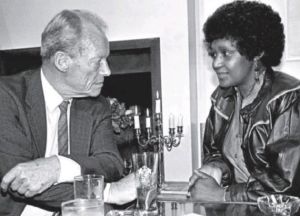
April 1986: Winnie met with former German Chancellor Willy Brandt. She met with several dignitaries on the issue of Apartheid and the release of her husband and others.
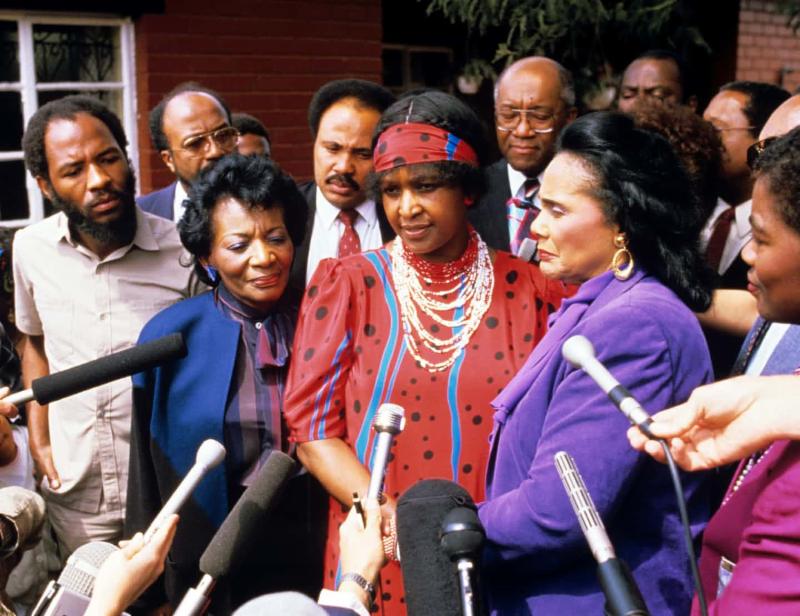
1986 in Soweto: Winnie with with Coretta Scott King (right) wife of civil rights icon, Martin Luther King, Jr.
Above: Winnie Mandela cheered by supporters after appearing in court in Krugersdorp, South Africa, in 1986. She commanded a natural constituency of her own among South Africa's poor and dispossessed. 
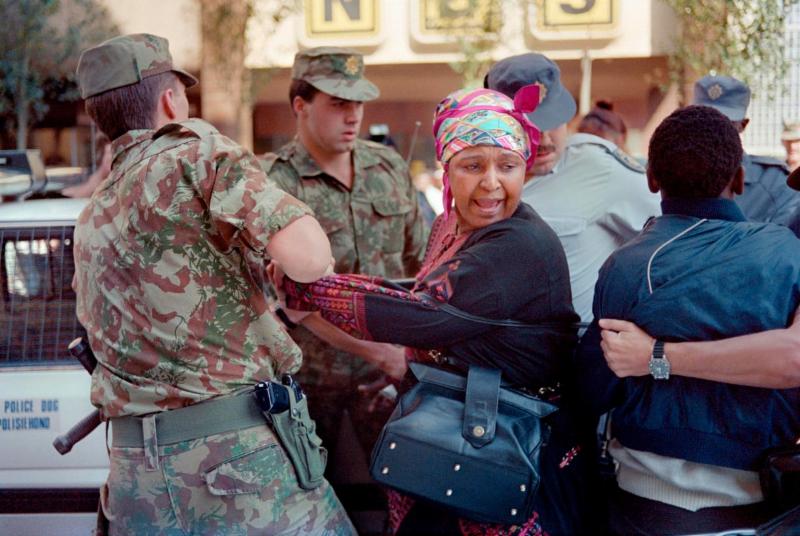
1991, Johannesburg: Winnie is arrested while staging a protest in Johannesburg calling for the release of detainees on hunger strike.
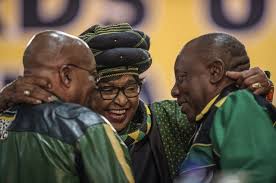
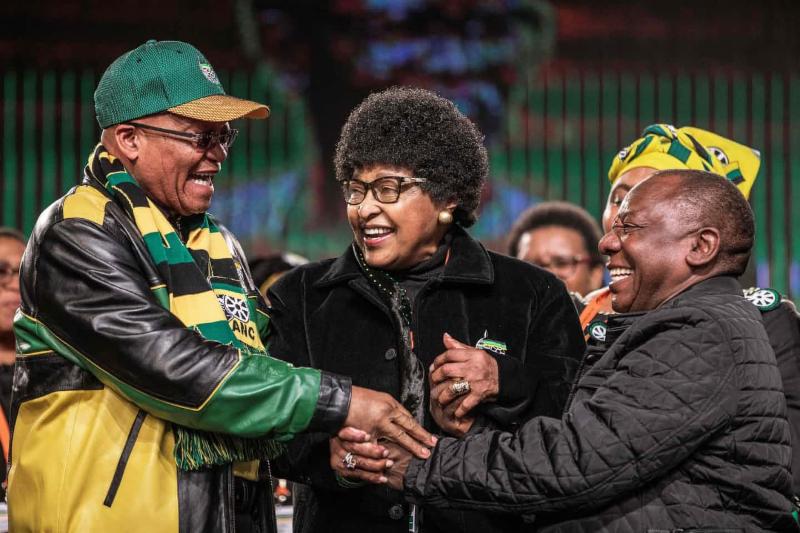
Above and below: 2017, Johannesburg: Winnie holds the hands of the then South African president Jacob Zuma and the then deputy president Cyril Ramaphosa during the opening session of the ANC policy conference.
South Africa has lost a mother, a leader and an icon, President Cyril Ramaphosa told the nation during his official announcement of the death of struggle icon Winnie Madikizela-Mandela on Monday night.

"She was a voice for the voiceless," said Ramaphosa.

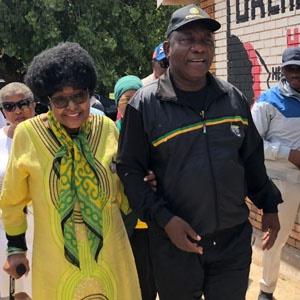
Right: Earlier in March, 2018, Winnie was accompanied by the President when she registered to vote.
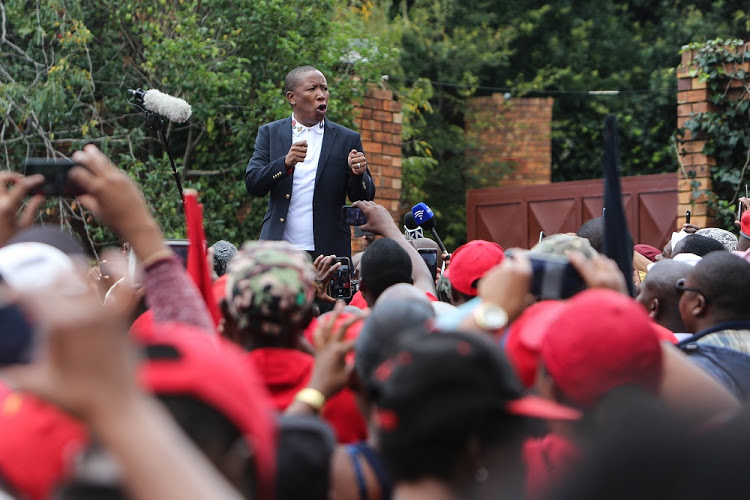
EFF leader Julius Malema and Member of South African Parliament addresses party supporters after visiting the family home of Winnie Madikizela Mandela in Orlando West, Soweto on April 3, 2018.

He said "Winnie Mandela [was] a stone that was rejected by the builders. Winnie Mandela‚ the president we did not have…who was denied to be president on the basis that she is a female and African. They feared her. Even today‚ they still fear her in death."

Malema was accompanied by EFF leaders including Dali Mpofu‚ Godrich Gardee, and Floyd Shivambu.

"We have lost a fearless fighter‚ a giant and a mother of the nation – a title which was bestowed on her by the people of South Africa," Malema said.
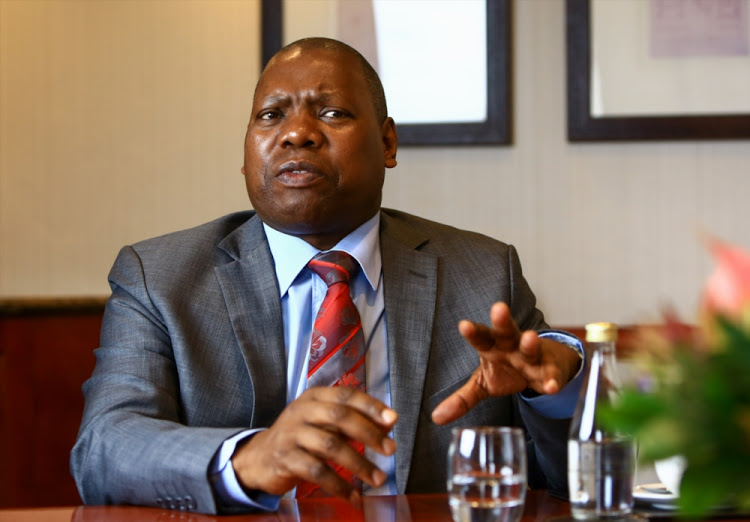
Above: Former KwaZulu-Natal premier Zweli Mkhize has described the death of Winnie Madikizela-Mandela as the end of an era for the country and the liberation movements. Speaking outside Madikizela-Mandela's home in Orlando West‚ Soweto‚ Mkhize said the whole country was mourning with the Madikizela and Mandela families.

Mkhize said despite the fact that the party knew that she had been ill‚ everyone expected her to recover.

 "We mourn a revolutionary‚ a real giant‚ a fighter. We will always remember her for her courage and determination to fight‚ and all the sacrifices that she made. As a very young woman who got married and had to face the harassment‚ detention and arrest of her husband.

--
Listserv moderated by Toyin Falola, University of Texas at Austin
To post to this group, send an email to USAAfricaDialogue@googlegroups.com
To subscribe to this group, send an email to USAAfricaDialogue+subscribe@googlegroups.com
Current archives at http://groups.google.com/group/USAAfricaDialogue
Early archives at http://www.utexas.edu/conferences/africa/ads/index.html
---
You received this message because you are subscribed to the Google Groups "USA Africa Dialogue Series" group.
To unsubscribe from this group and stop receiving emails from it, send an email to usaafricadialogue+unsubscribe@googlegroups.com.
For more options, visit https://groups.google.com/d/optout.

No comments:

Post a Comment

 
Vida de bombeiro Recipes Informatica Humor Jokes Mensagens Curiosity Saude Video Games Car Blog Animals Diario das Mensagens Eletronica Rei Jesus News Noticias da TV Artesanato Esportes Noticias Atuais Games Pets Career Religion Recreation Business Education Autos Academics Style Television Programming Motosport Humor News The Games Home Downs World News Internet Car Design Entertaimment Celebrities 1001 Games Doctor Pets Net Downs World Enter Jesus Variedade Mensagensr Android Rub Letras Dialogue cosmetics Genexus Car net Só Humor Curiosity Gifs Medical Female American Health Madeira Designer PPS Divertidas Estate Travel Estate Writing Computer Matilde Ocultos Matilde futebolcomnoticias girassol lettheworldturn topdigitalnet Bem amado enjohnny produceideas foodasticos cronicasdoimaginario downloadsdegraca compactandoletras newcuriosidades blogdoarmario arrozinhoii sonasol halfbakedtaters make-it-plain amatha